BUZLUDŽA [BG]
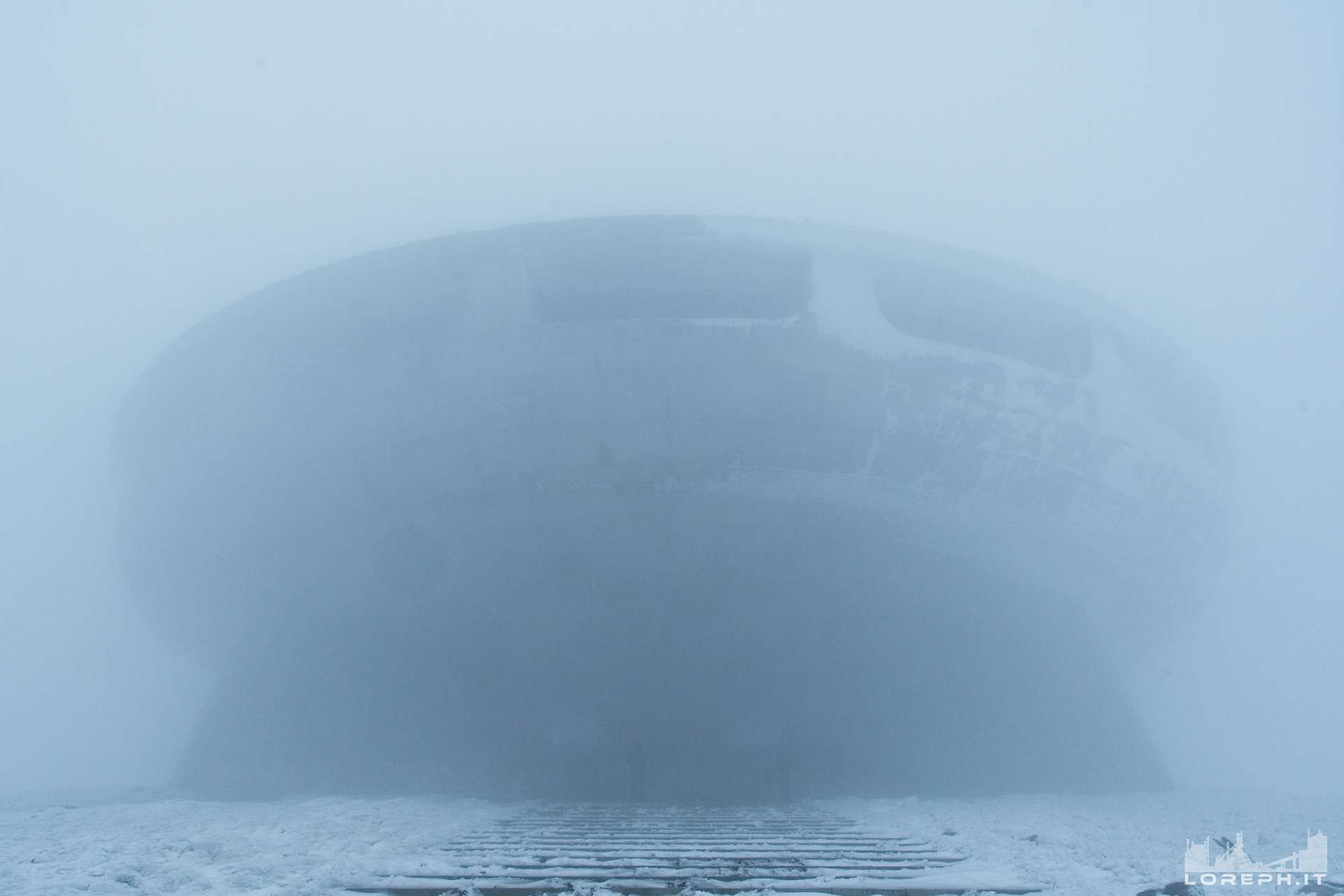
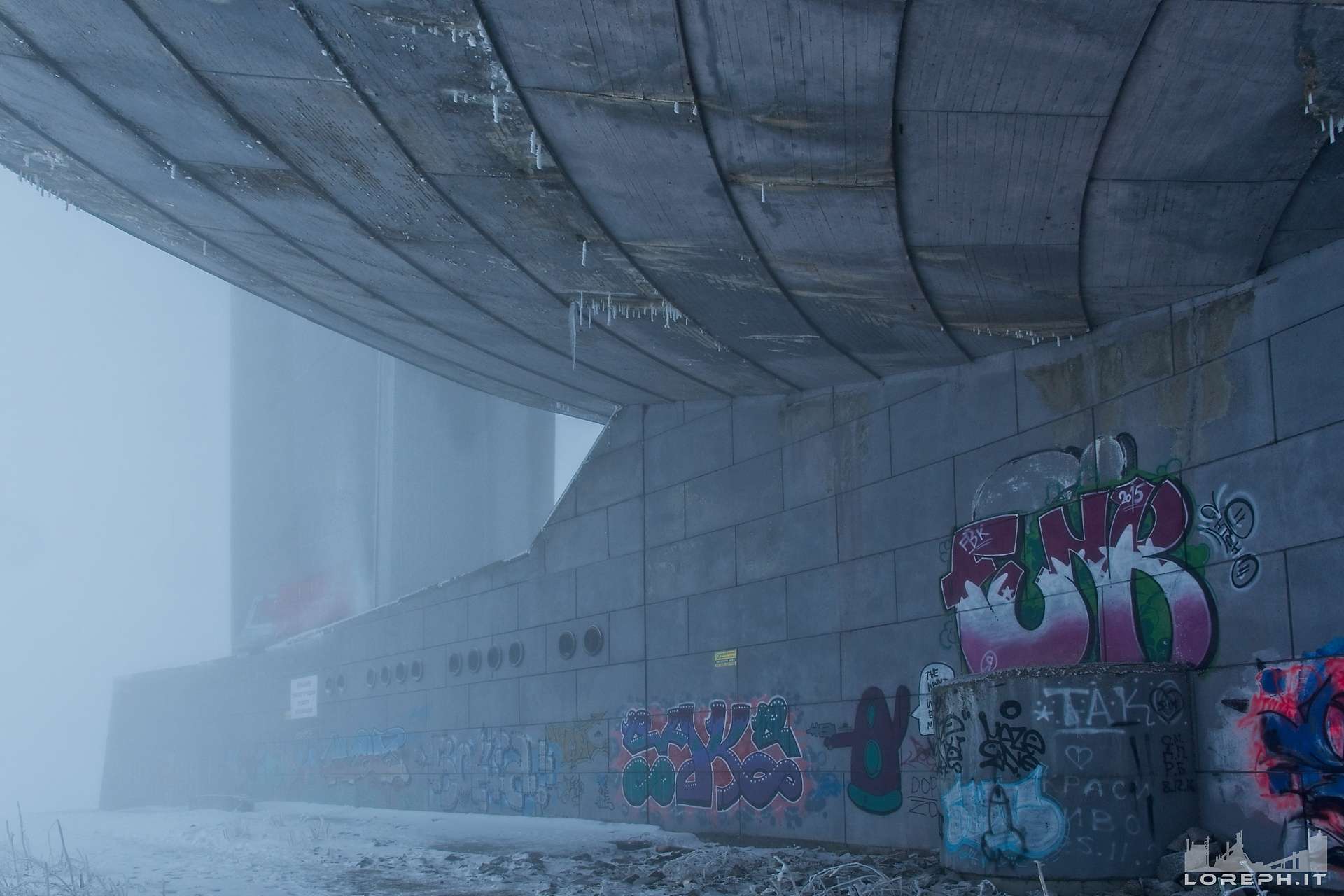
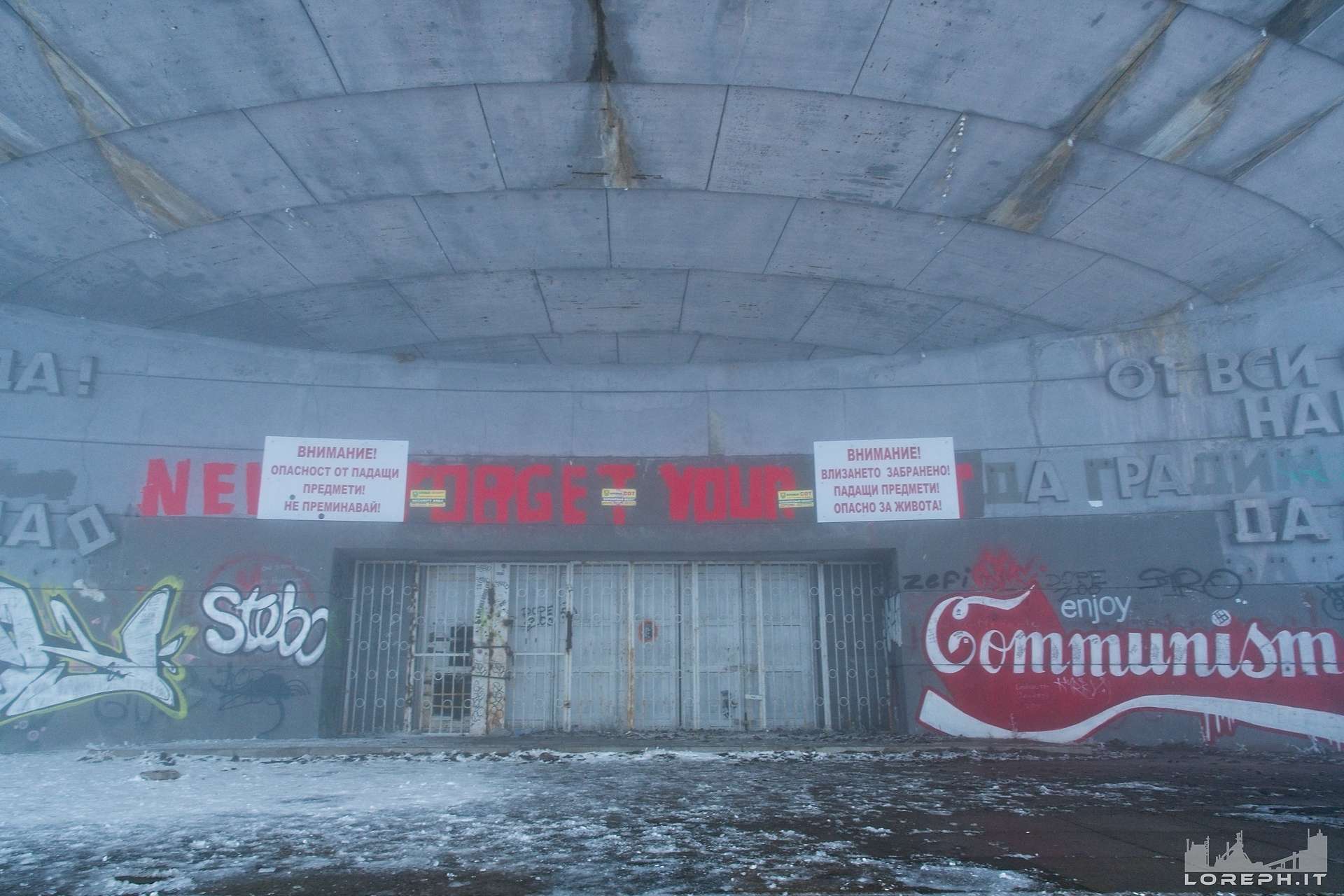
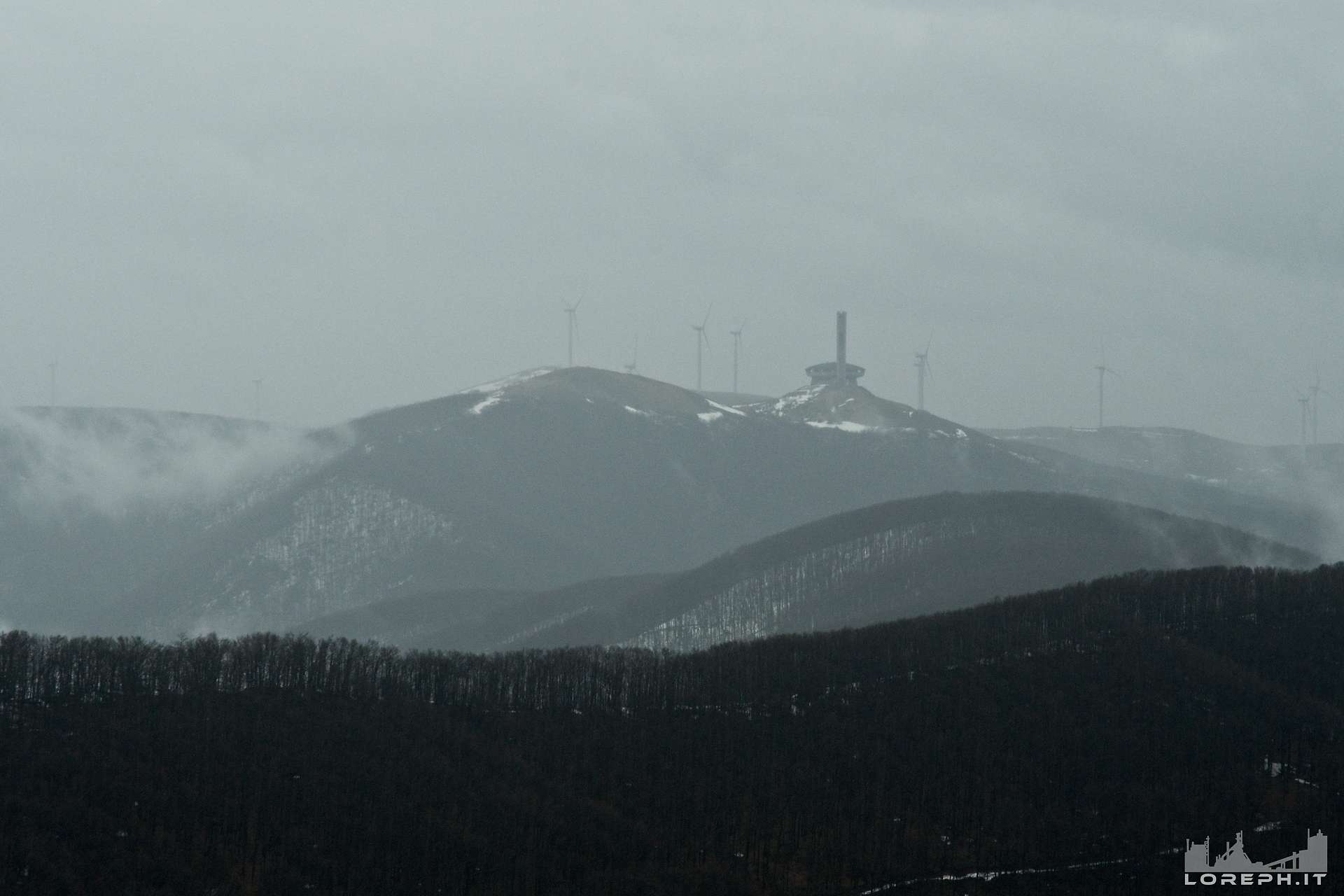
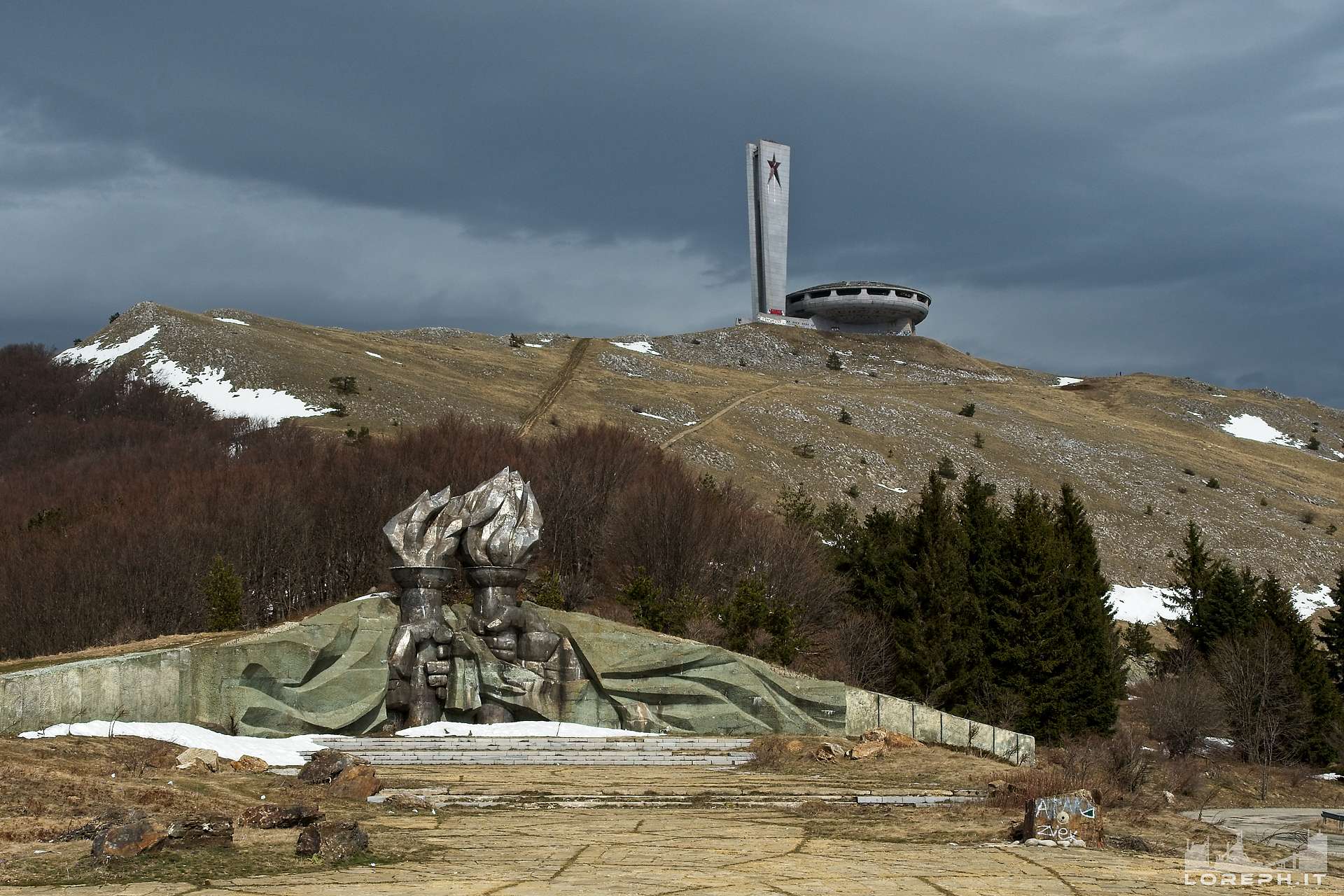
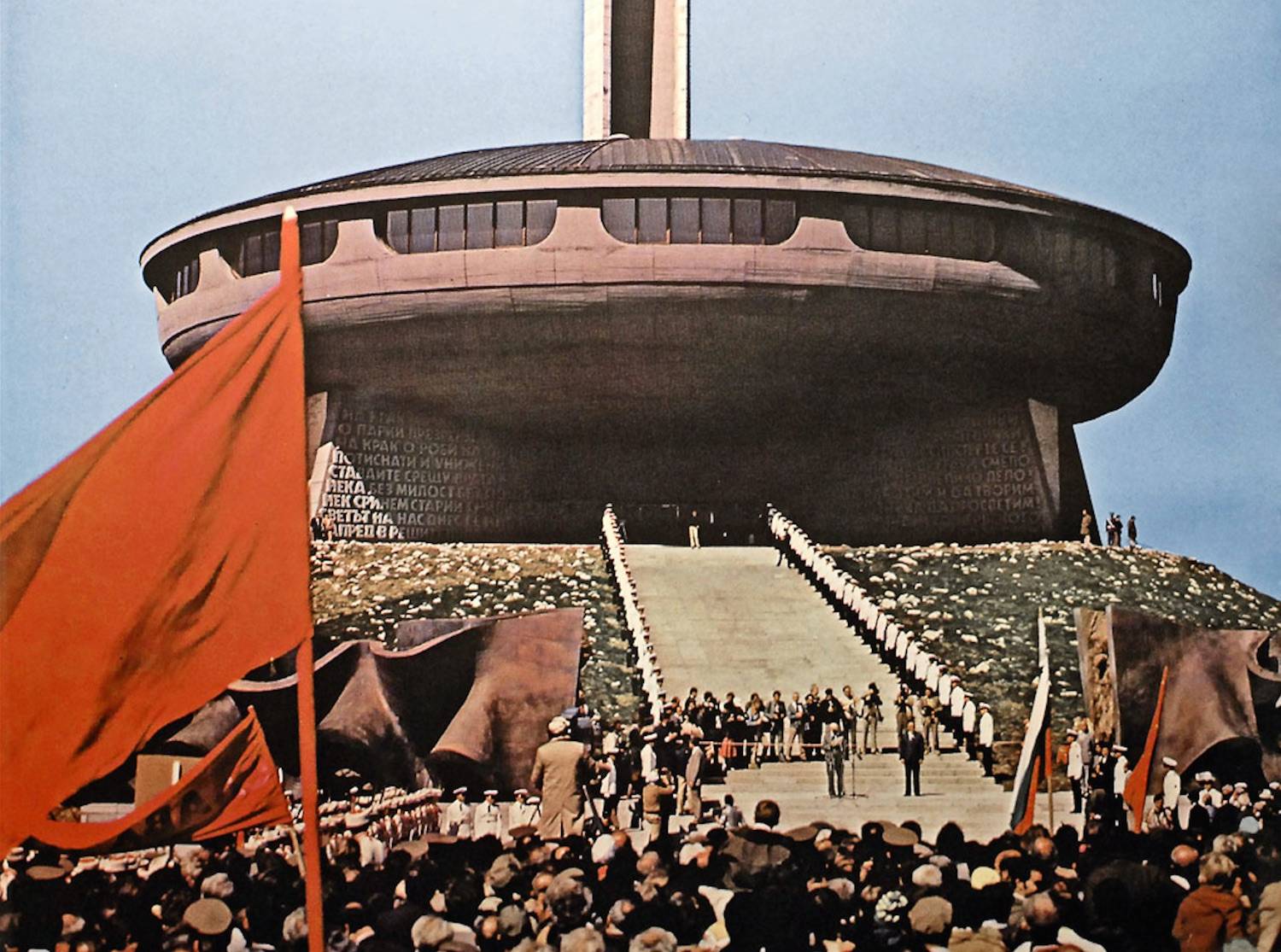
Exploration #181. The official name of the Buzludža monument is “Monument House of the Bulgarian Communist Party”. It was built on the Hadzhi Dimitar Peak (until 1942 known as Buzludža Peak), which is close to the geographical centre of Bulgaria. It is the largest ideological monument to the communist regime in Bulgaria. After the political changes in Bulgaria in November 1989, the new government had no interest in this symbol of communism and it was abandoned.
The monument commemorates a secret assembly of socialists from different Bulgarian areas, on 2 August 1891, to form an organized socialist movement, the Bulgarian Social Democratic Party. This assembly was an initiative of the socialist leader Dimitar Blagoev and this new party (from 1894 the Bulgarian Social Democratic Workers’ Party) was in fact a forerunner of the Bulgarian Communist Party, founded in 1919. But there are two more reasons why this spot is important for Bulgarian history. On 18 July 1868, the famous revolutionary Hadzhi Dimitar led his rebels in a final battle against the Ottomans, fought at Buzludža Peak. And on 25 January 1944, Bulgarian partisans ambushed here fascist forces engaged in training exercises, ending up in a fierce fire fight, during which several partisans lost their lives.
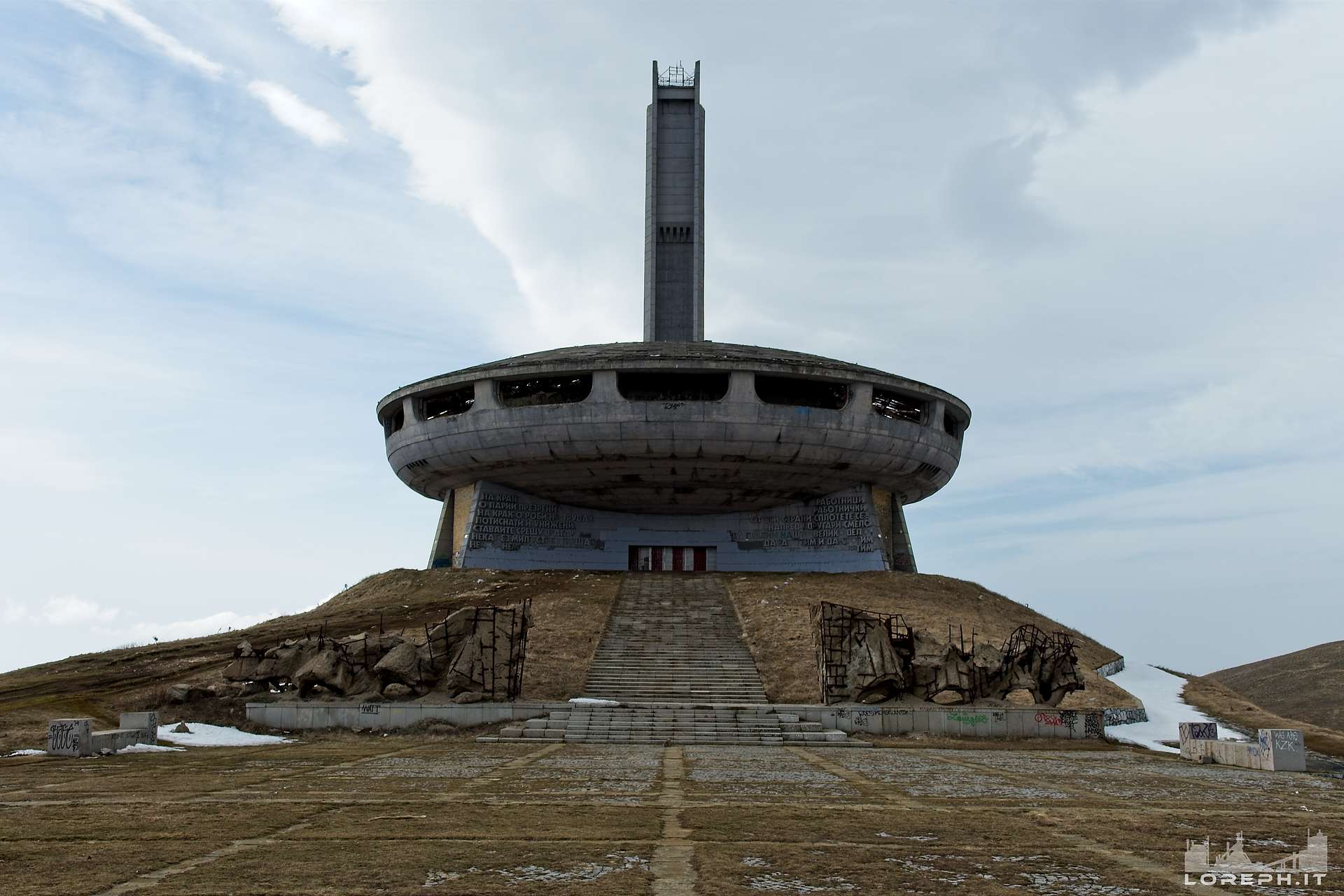
The decision to build this monument was taken by the Bulgarian Communist Party on 11 March 1971. Its construction began in January 1974 and was financed with donations and the sale of stamps, in total worth more than 14 million Bulgarian Leva (nowadays about 35 million USD). The monument, a round domed building with a 70m high double pylon, was designed by a team led by the architect Georgi Stoilov. The structures were designed by professor engineer Dobromir Kolarov. The Monument House of the Bulgarian Communist Party was unveiled on 23 August 1981 by party and state leader Todor Zhivkov.
To build a stable foundation for the monument, about 9m of the peak had to be levelled; 15,000m³ of rock was dug out, reducing the height of Hadzhi Dimitar Peak from 1441 to 1432m. A total of 70,000 tons of concrete, 3,000 tons of reinforced steel and 40 tons of gilded glass were used for the construction, involving more than 6,000 builders and workers. At the top of the double pylon, on its wide sides, are two irregular 5-pointed stars, made of red glass and measuring 6.5 x 12m (the largest in the world). The stars had lighting fixtures; at darkness, they could be seen from far away.
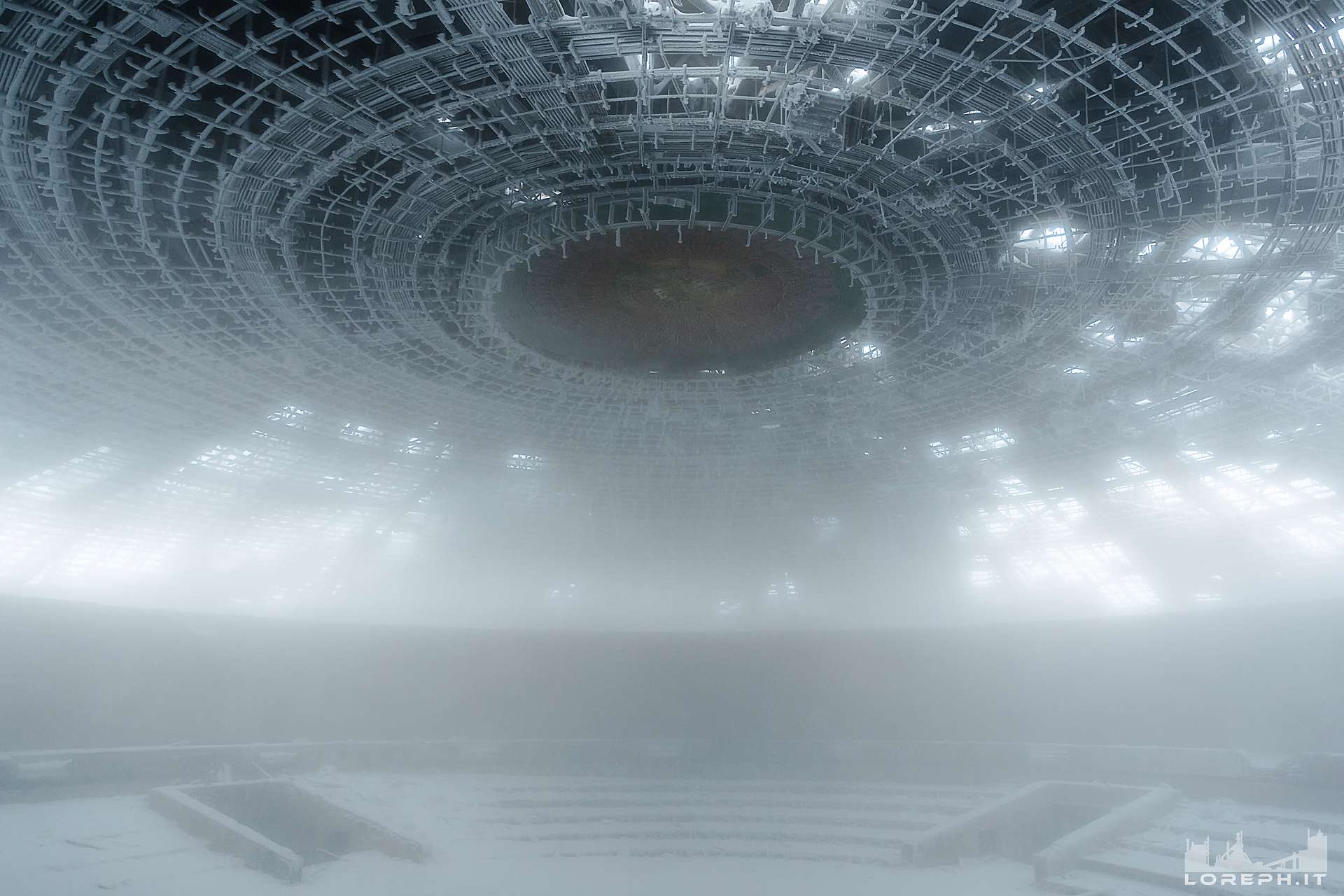
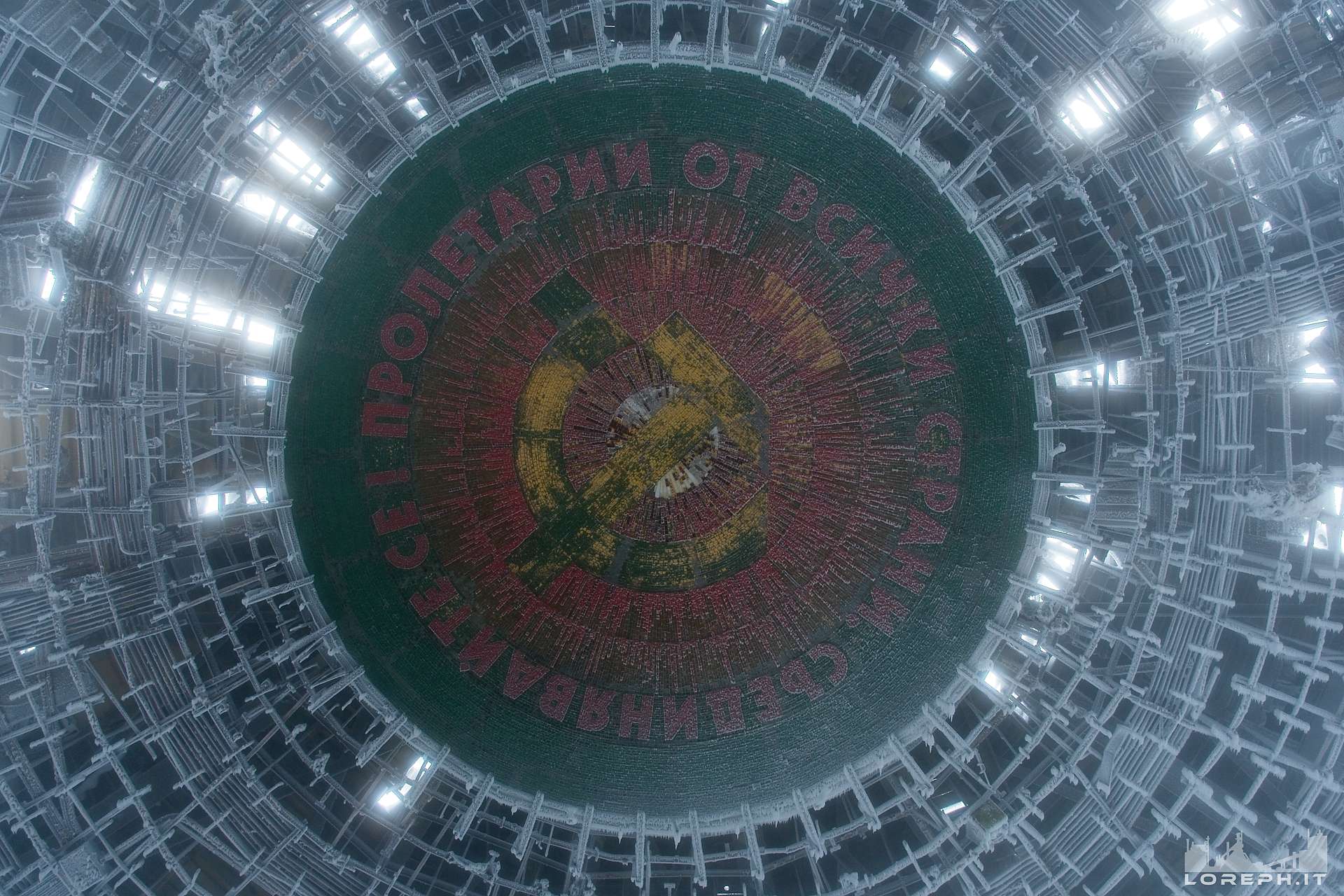
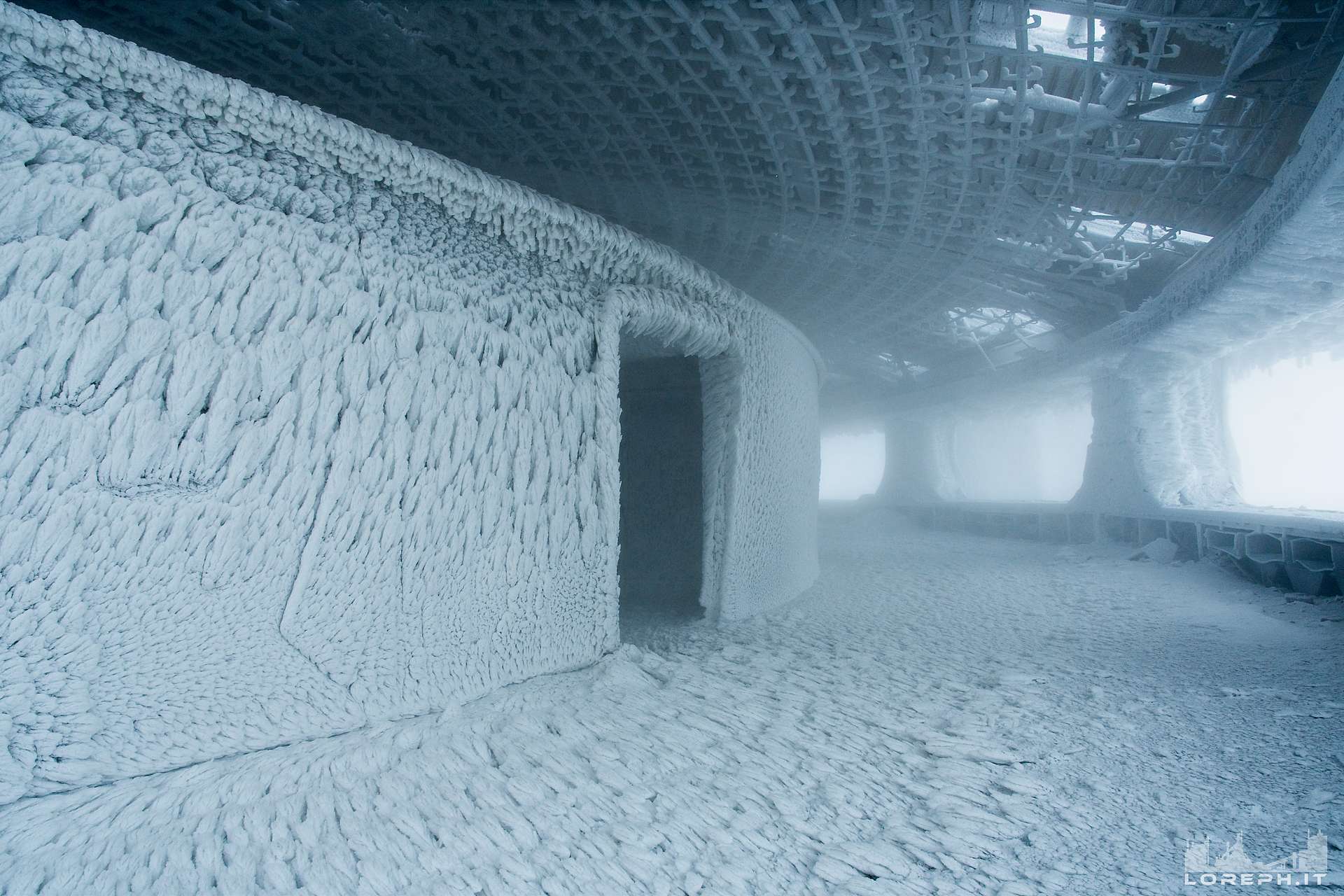
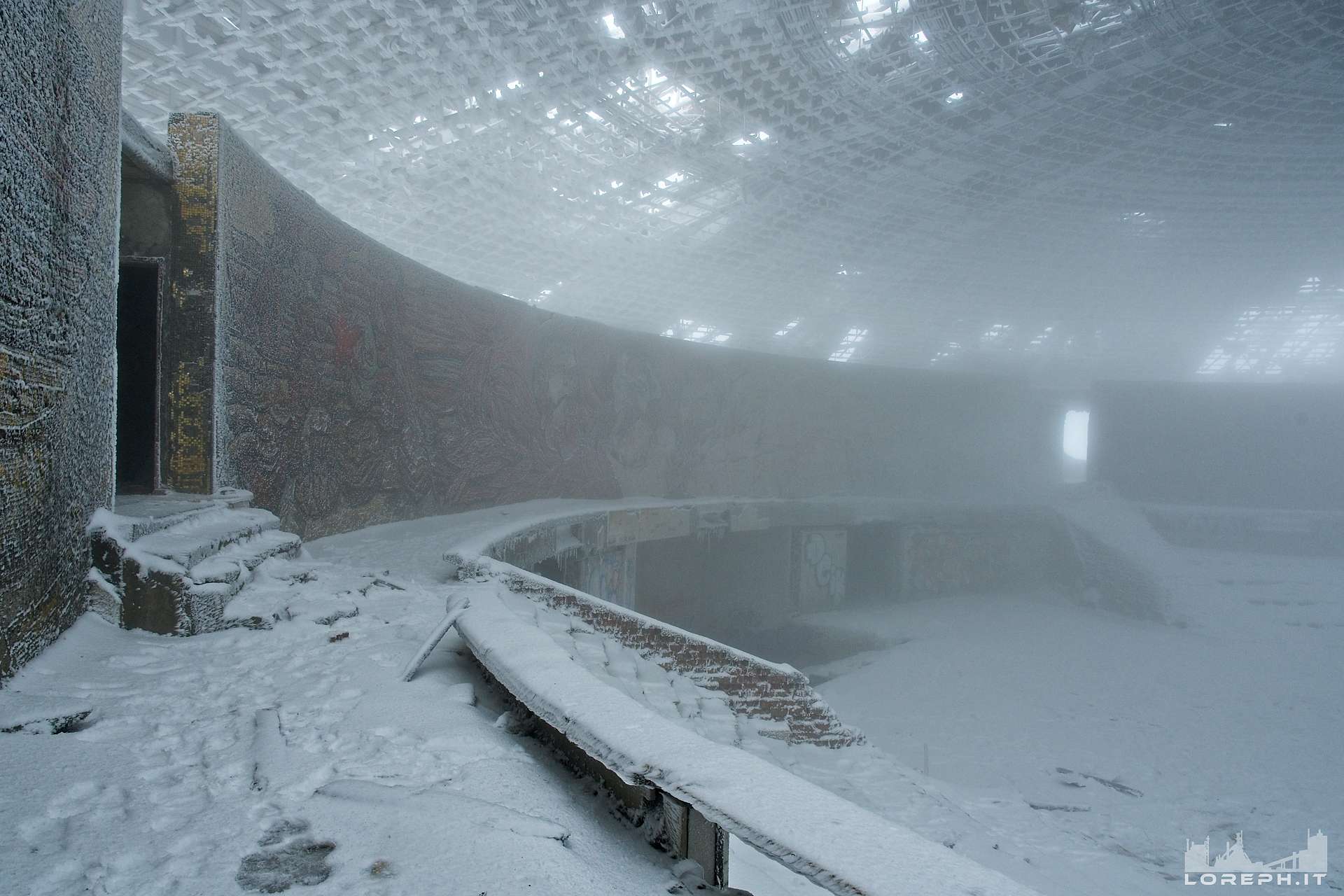
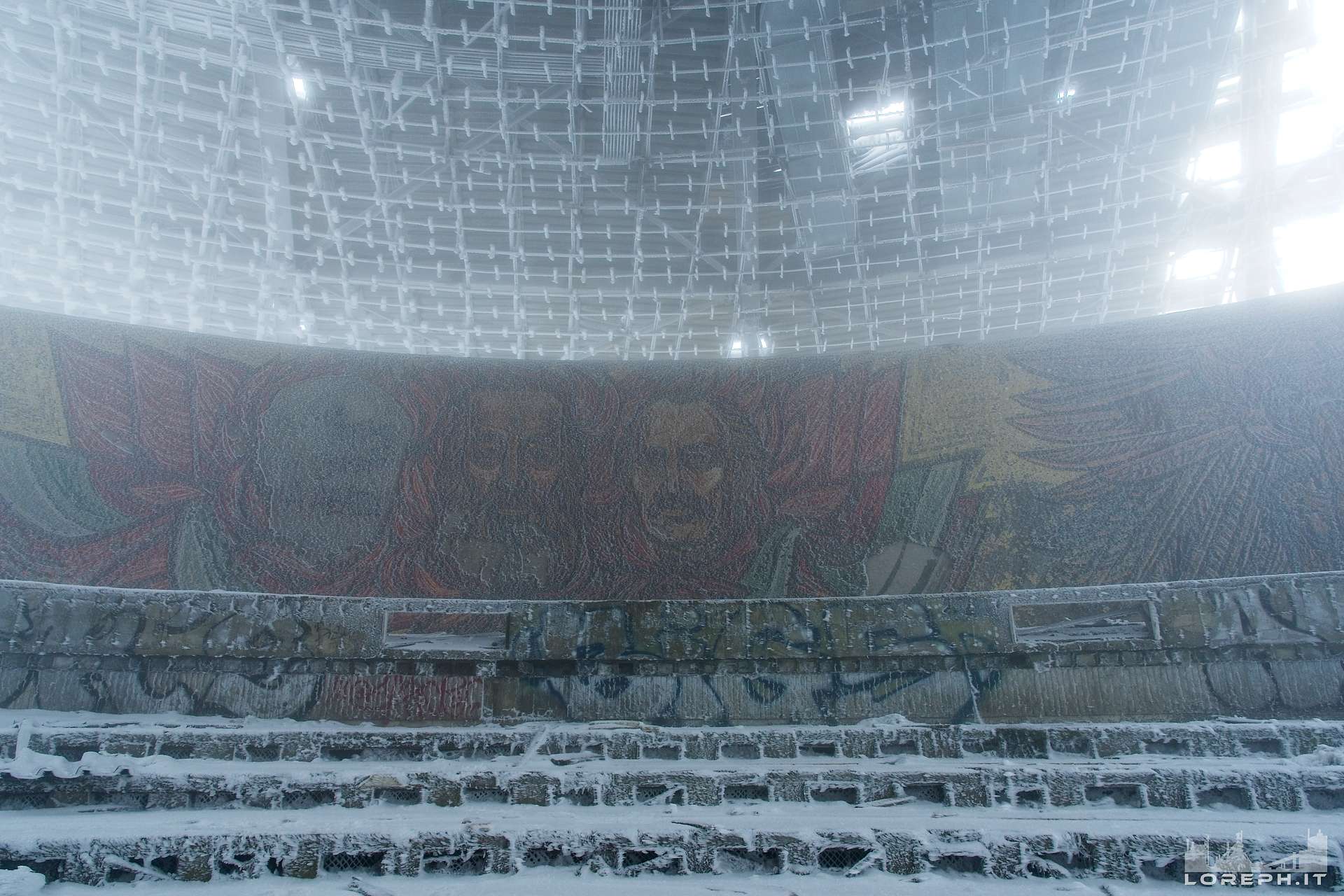
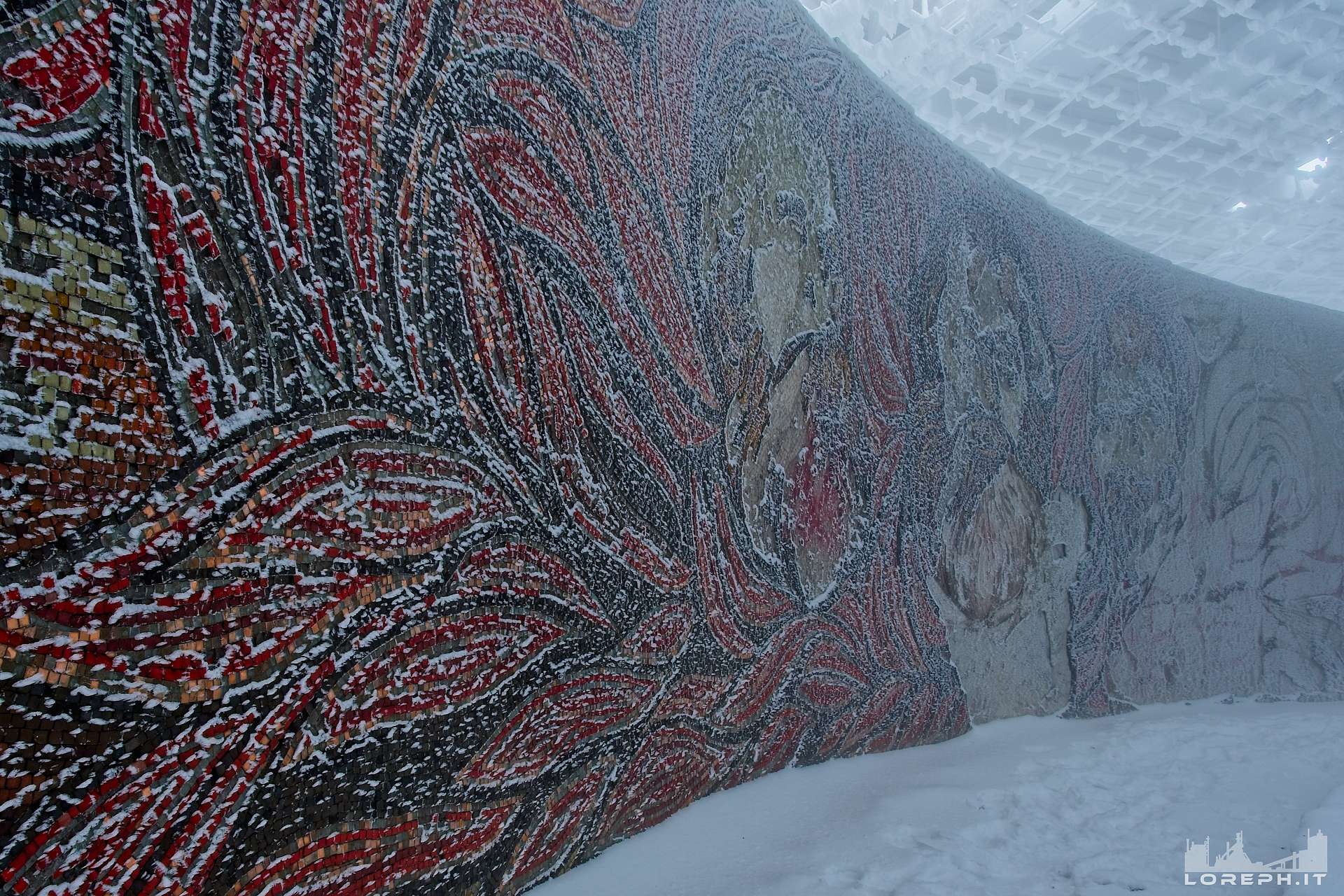
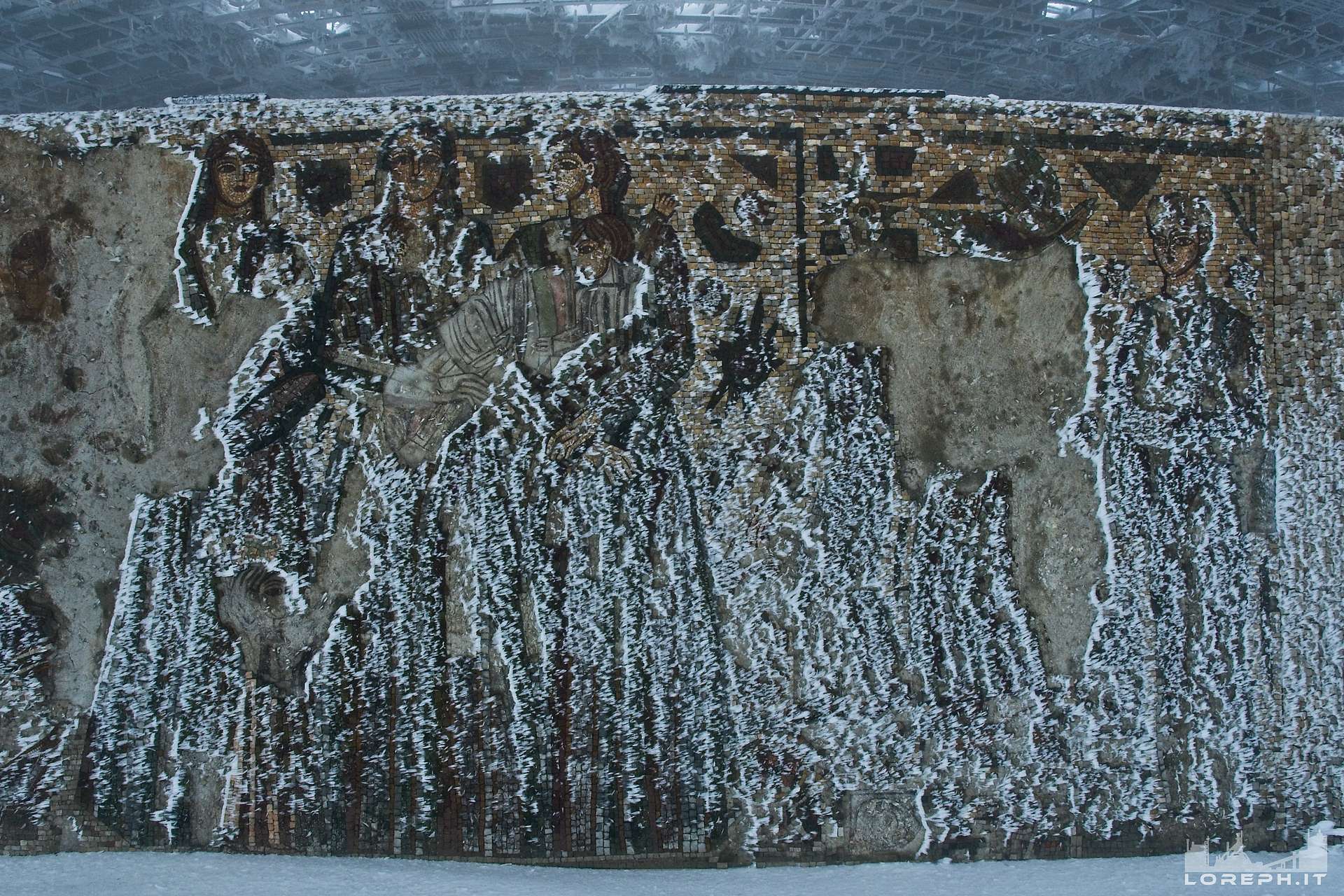
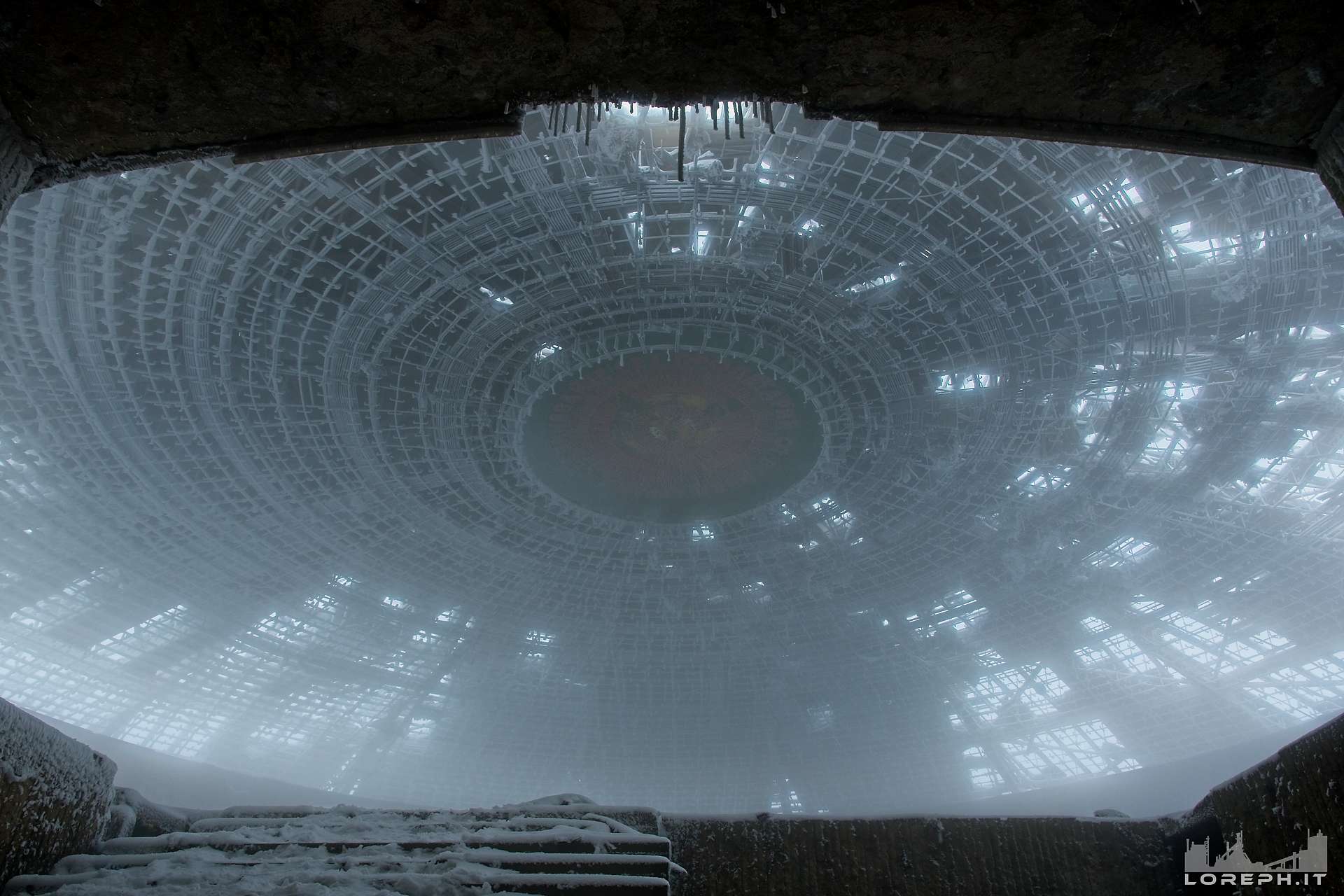
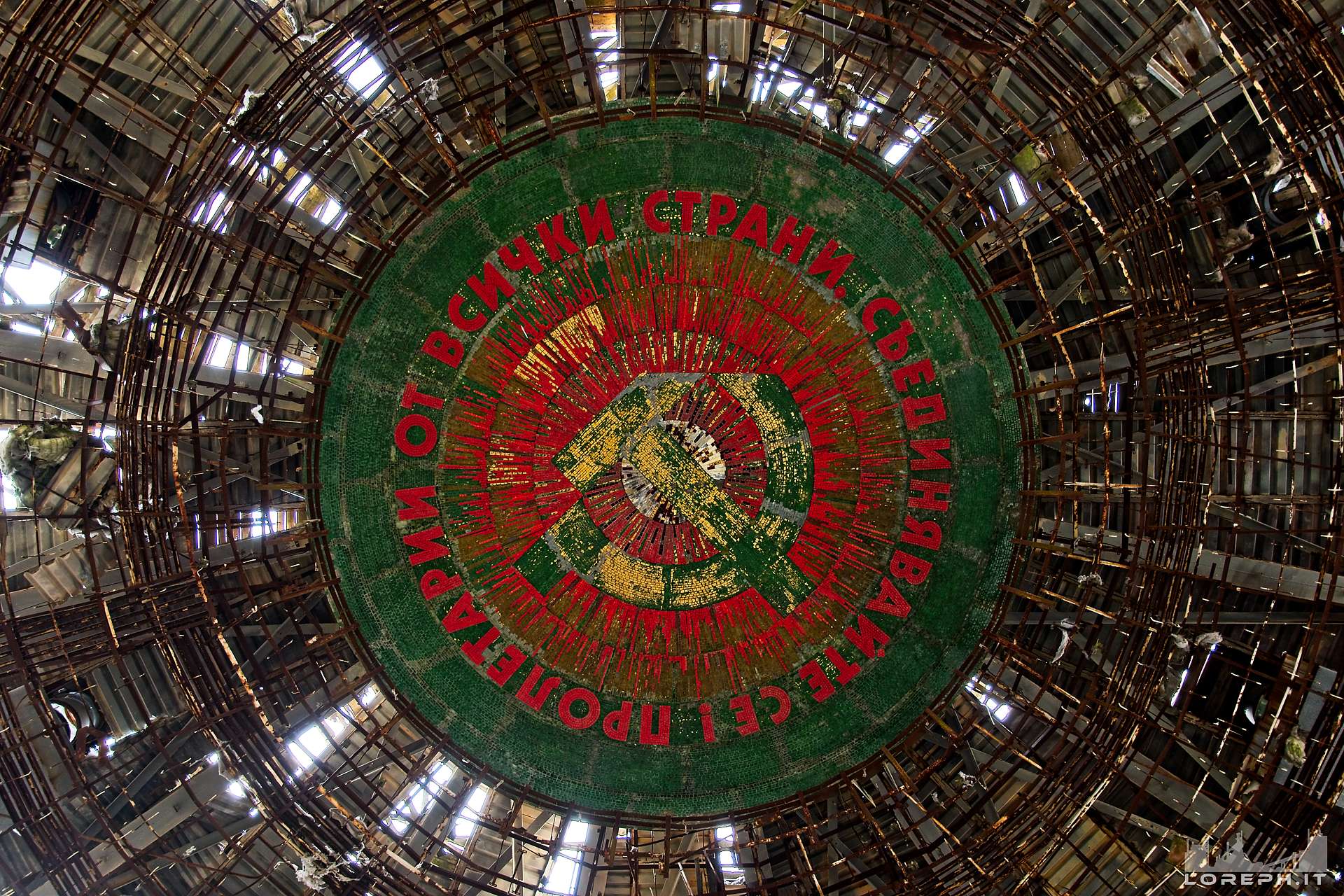
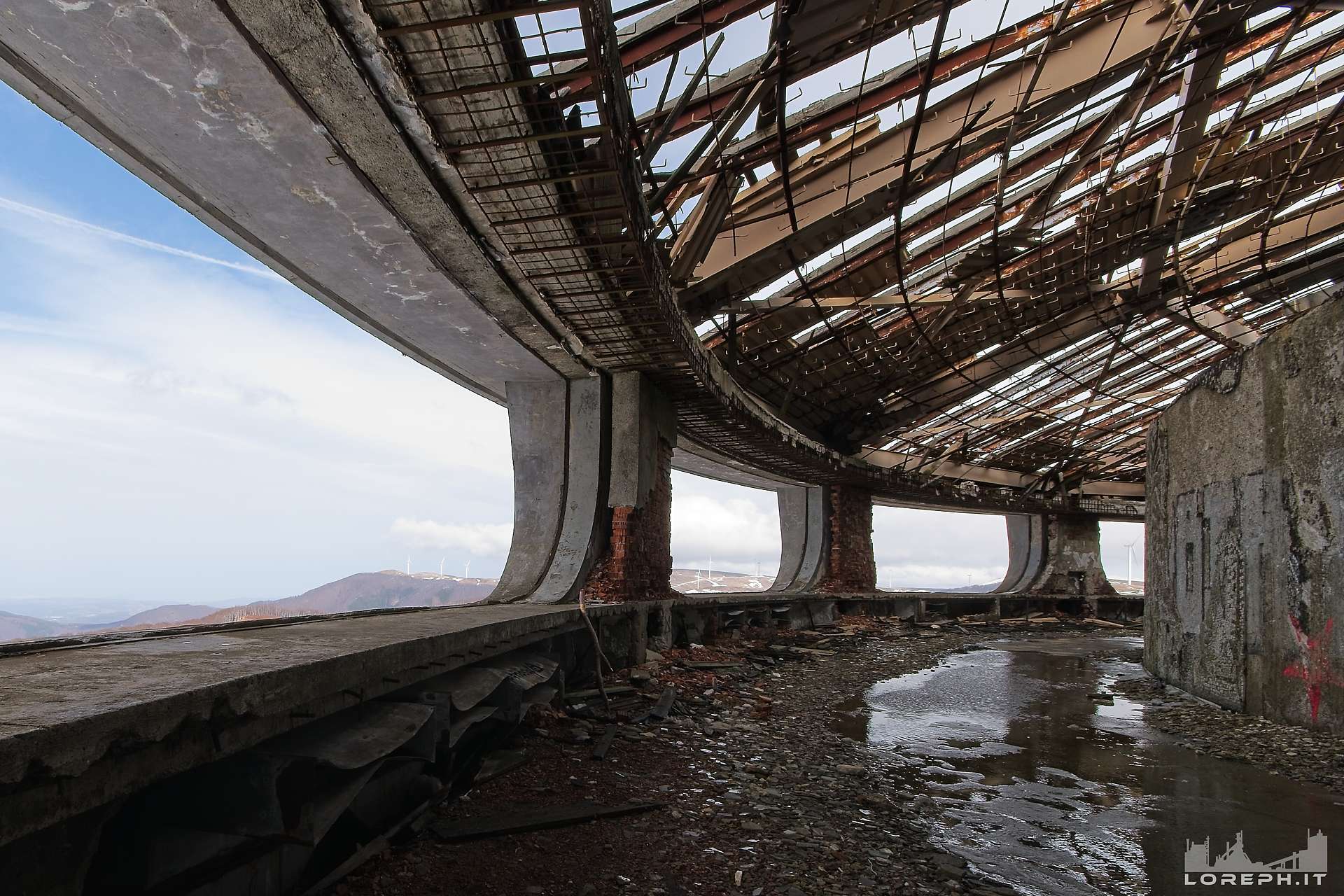
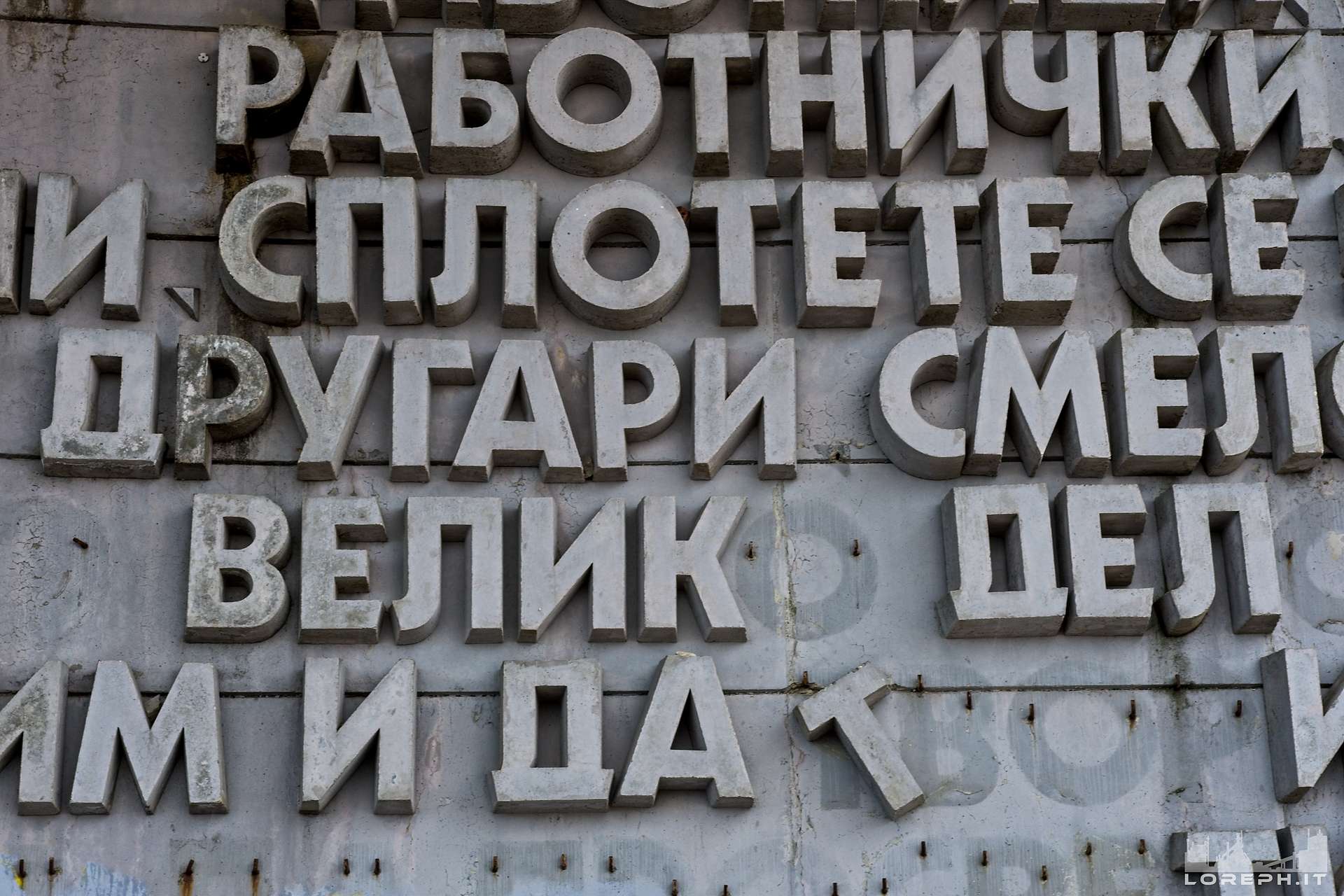
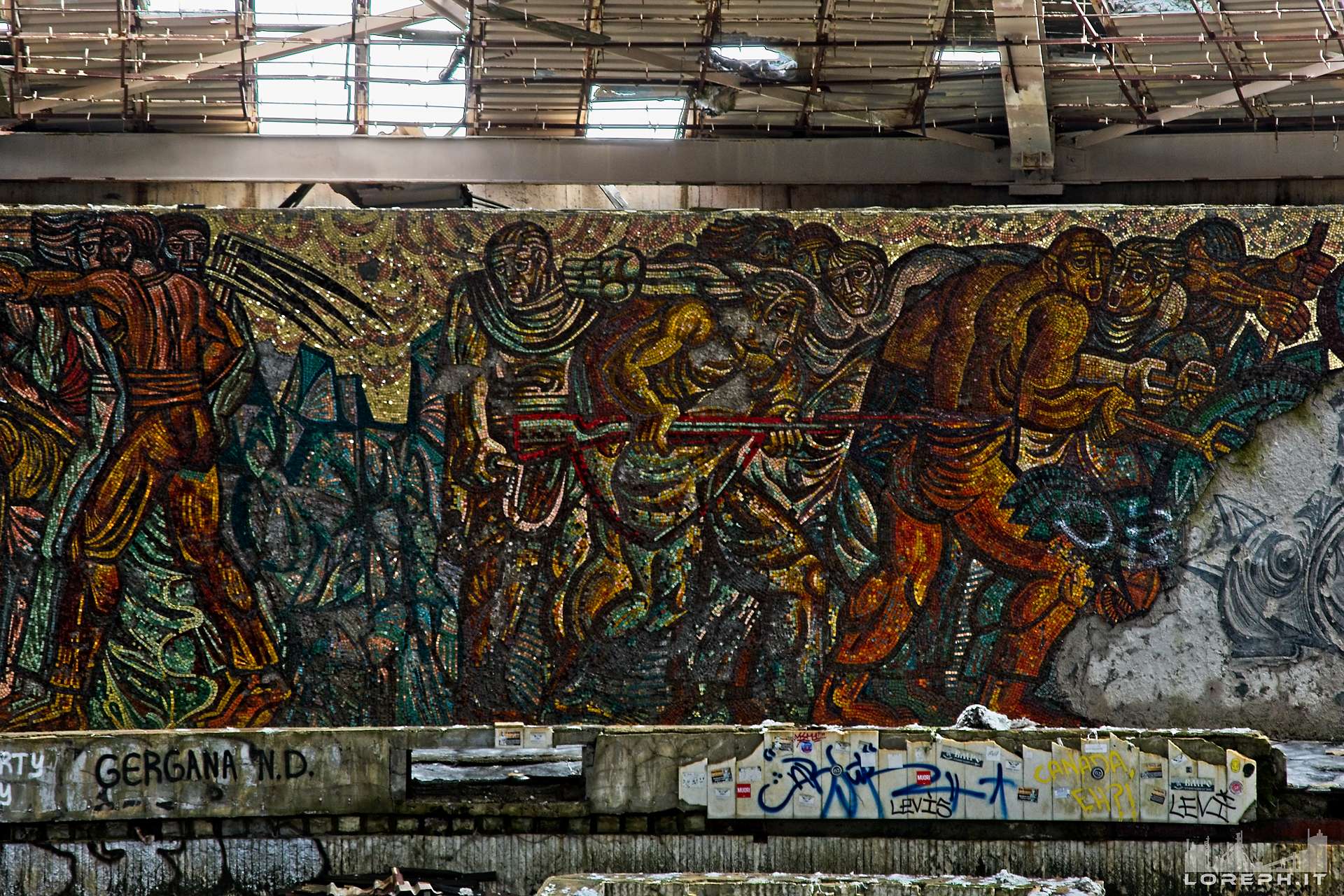
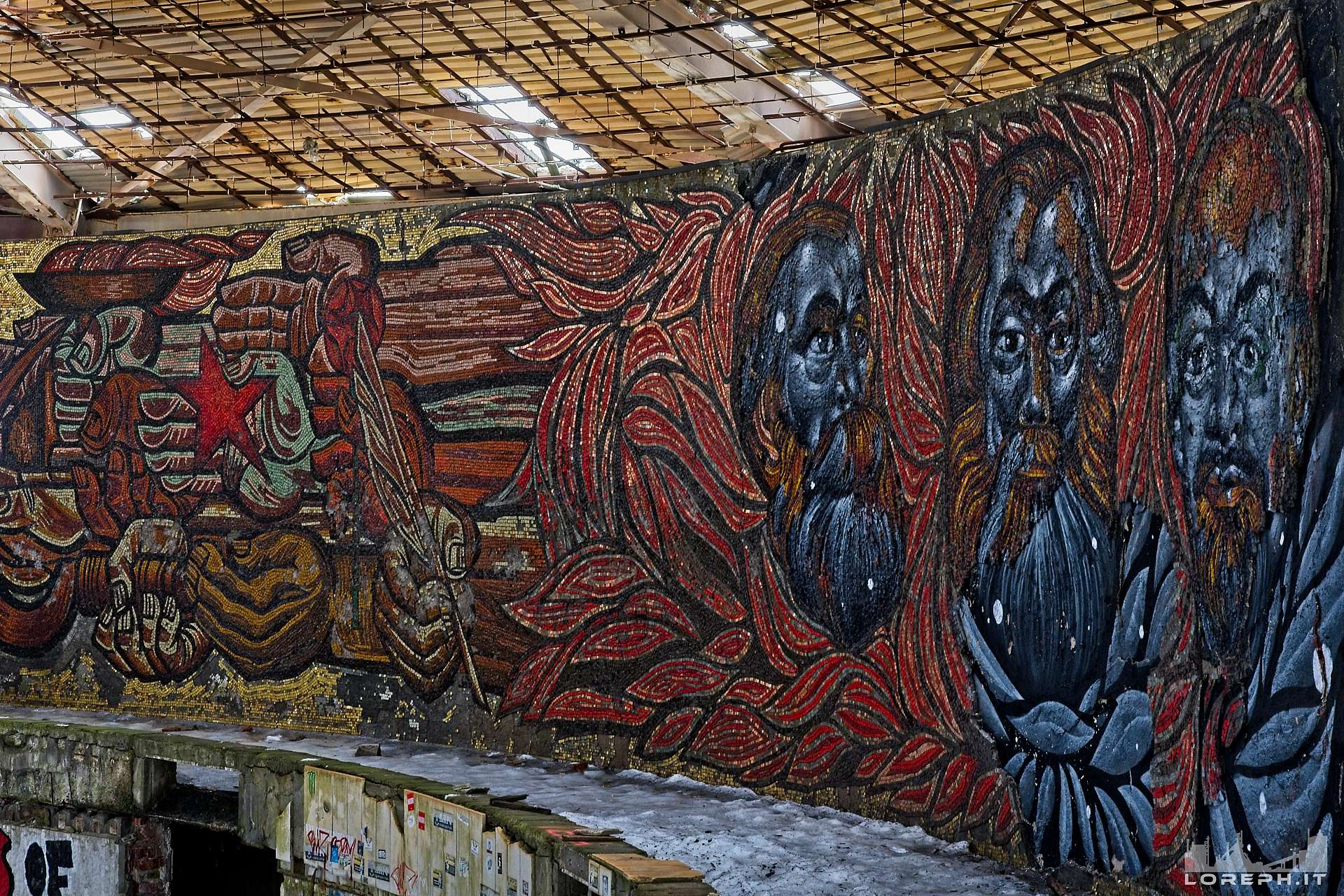
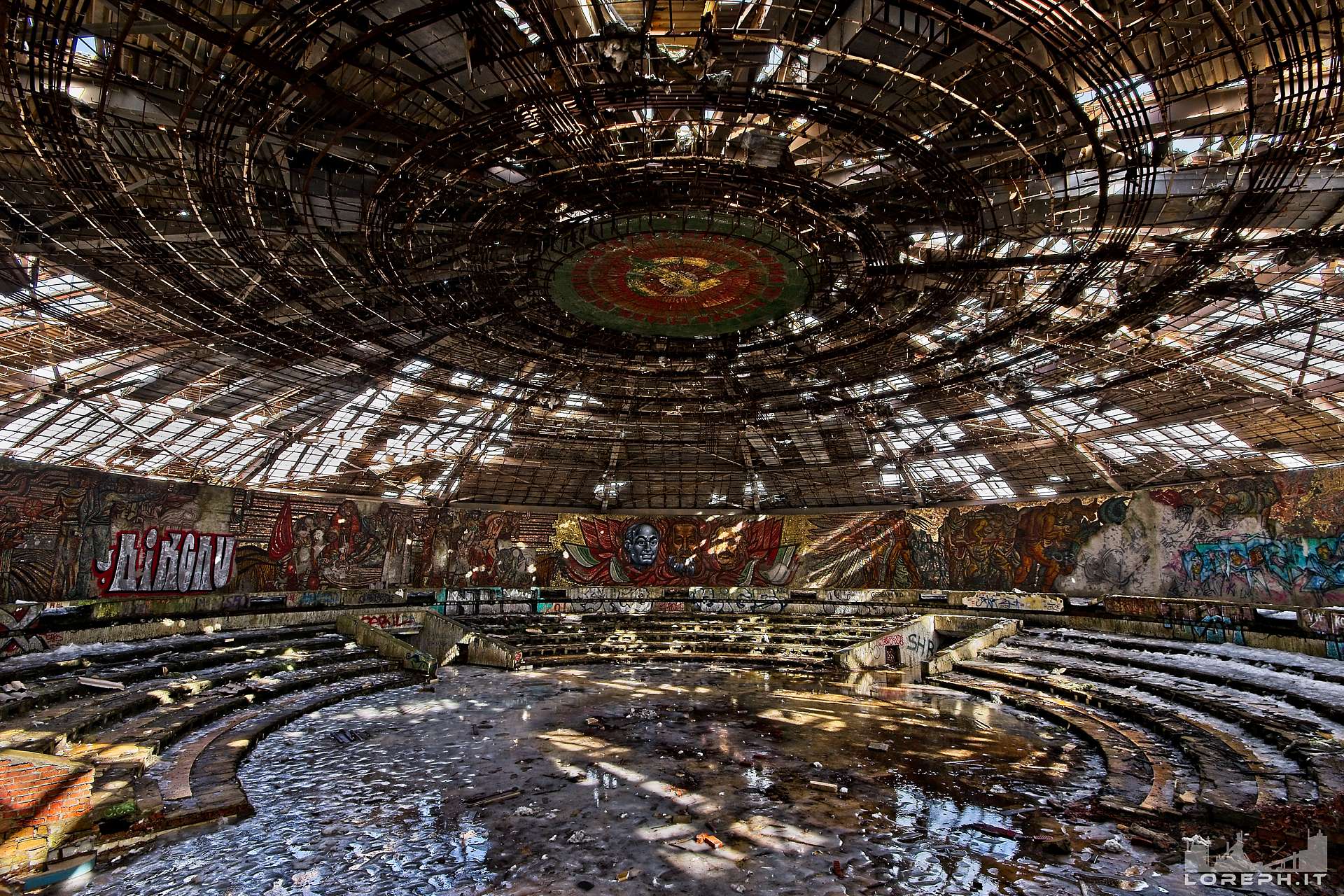
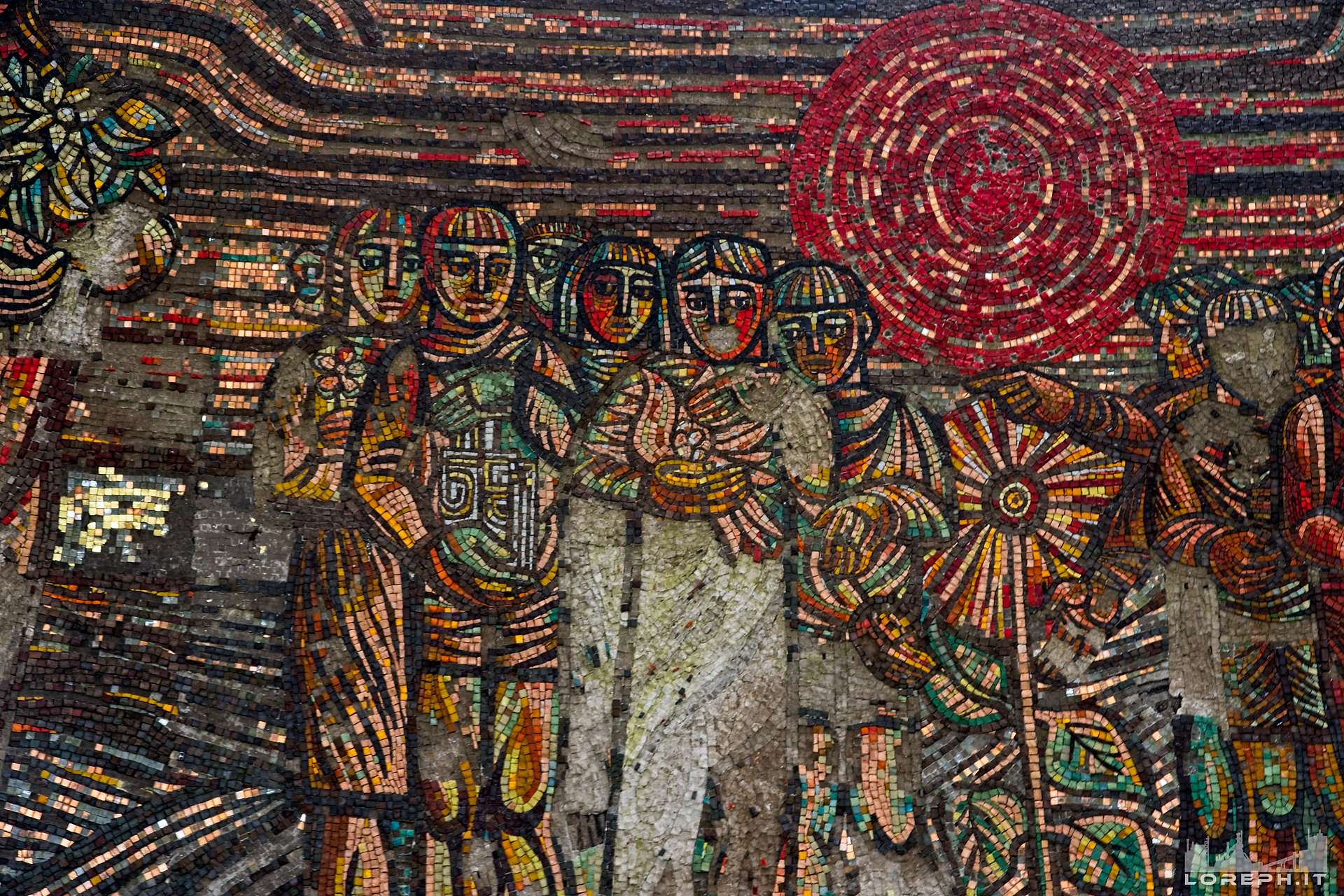
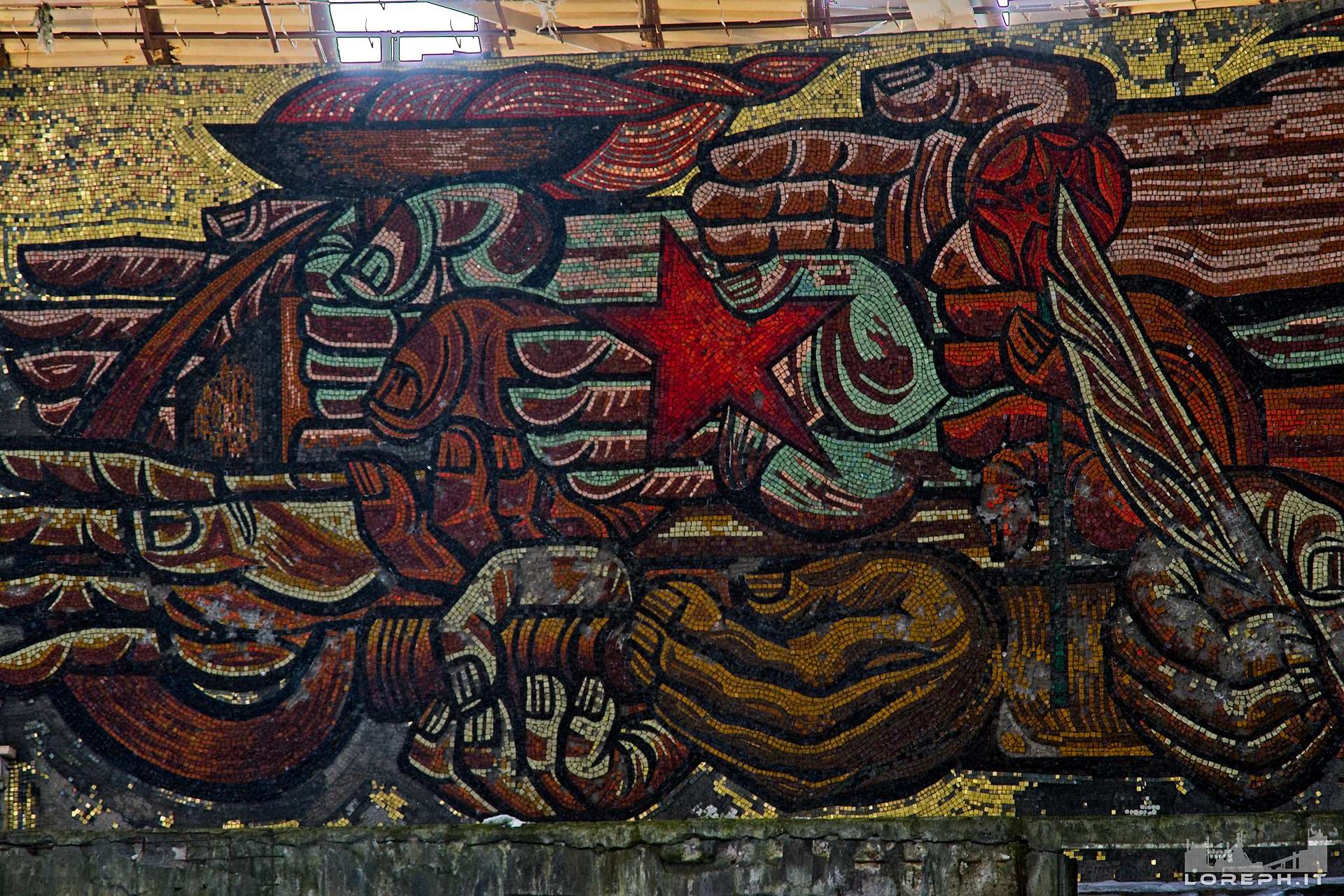
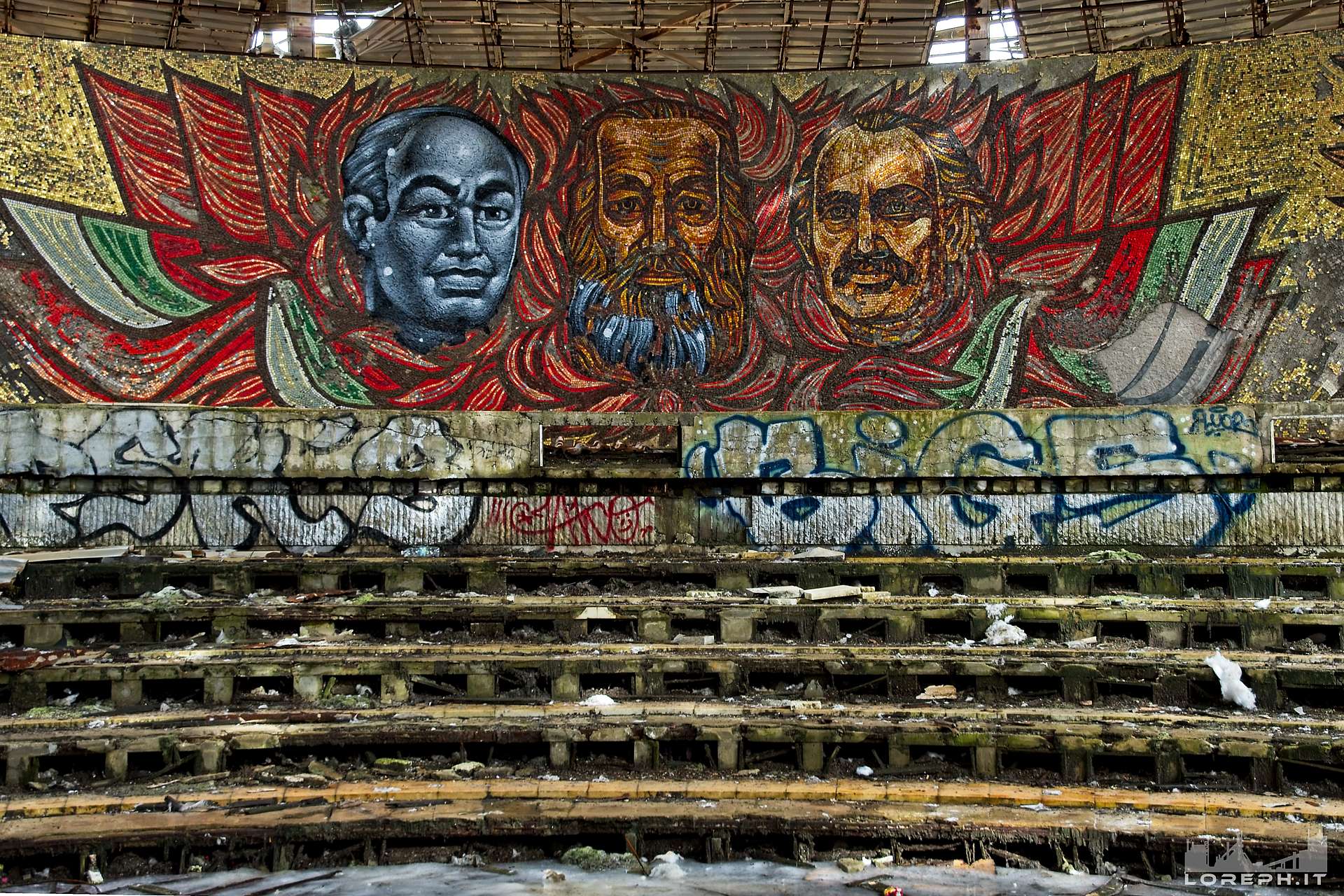
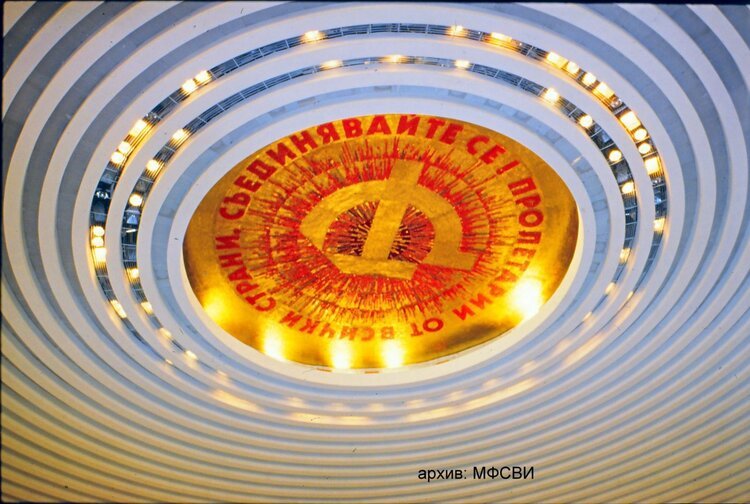
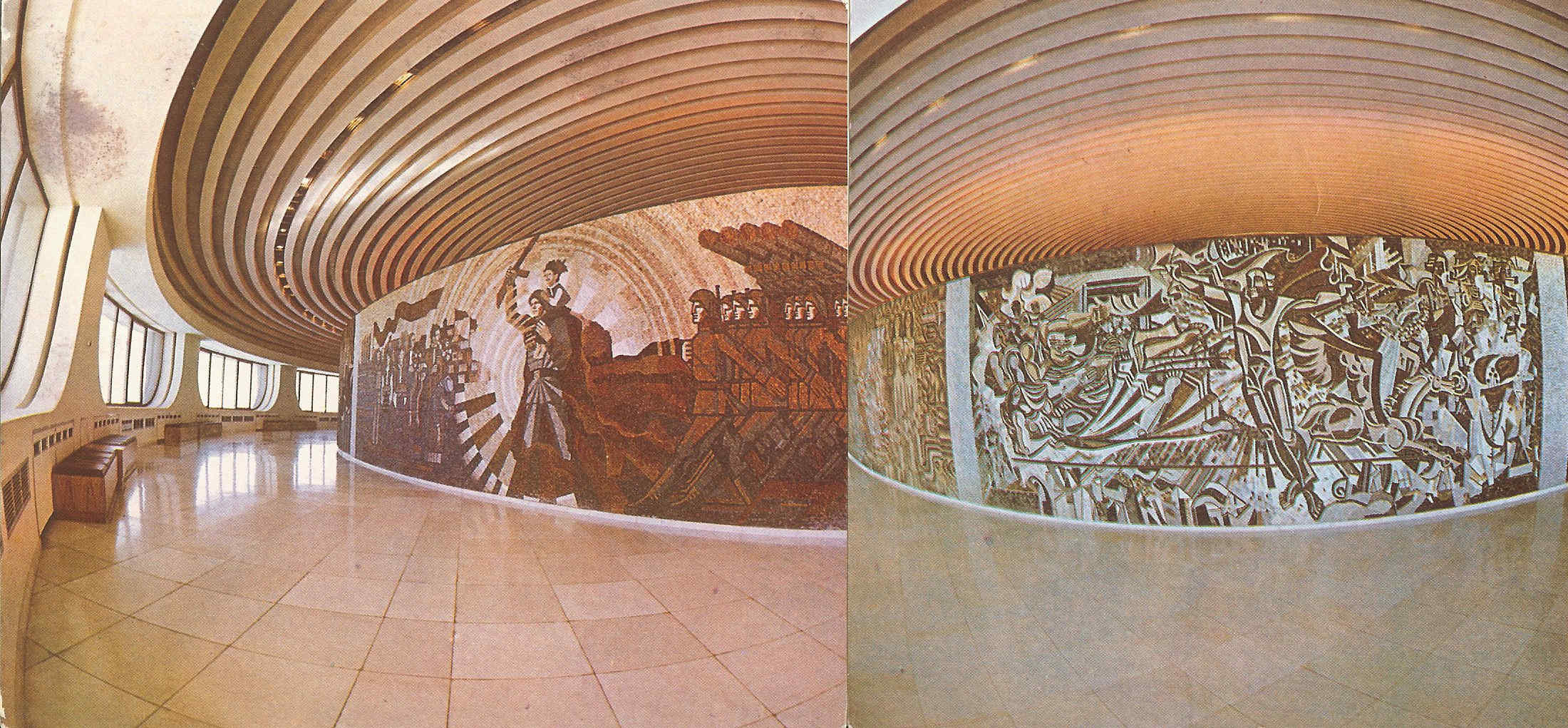
The round domed building consists mainly of the ceremonial hall with a corridor around it, covered with a copper roof of about 2500m². The round ceremonial hall is decorated with mosaics with a total area of 510m². The hall is surrounded by a corridor with large glass windows, and 14 mosaics covering the walls. More than 60 artists needed about 18 months to create the interior artistic design. All mosaics together cover a surface of about 920m². In the ceiling of the hall, one can still see the mosaic ‘Proletarians from all countries, unite!’, with the communist symbol hammer and sickle.
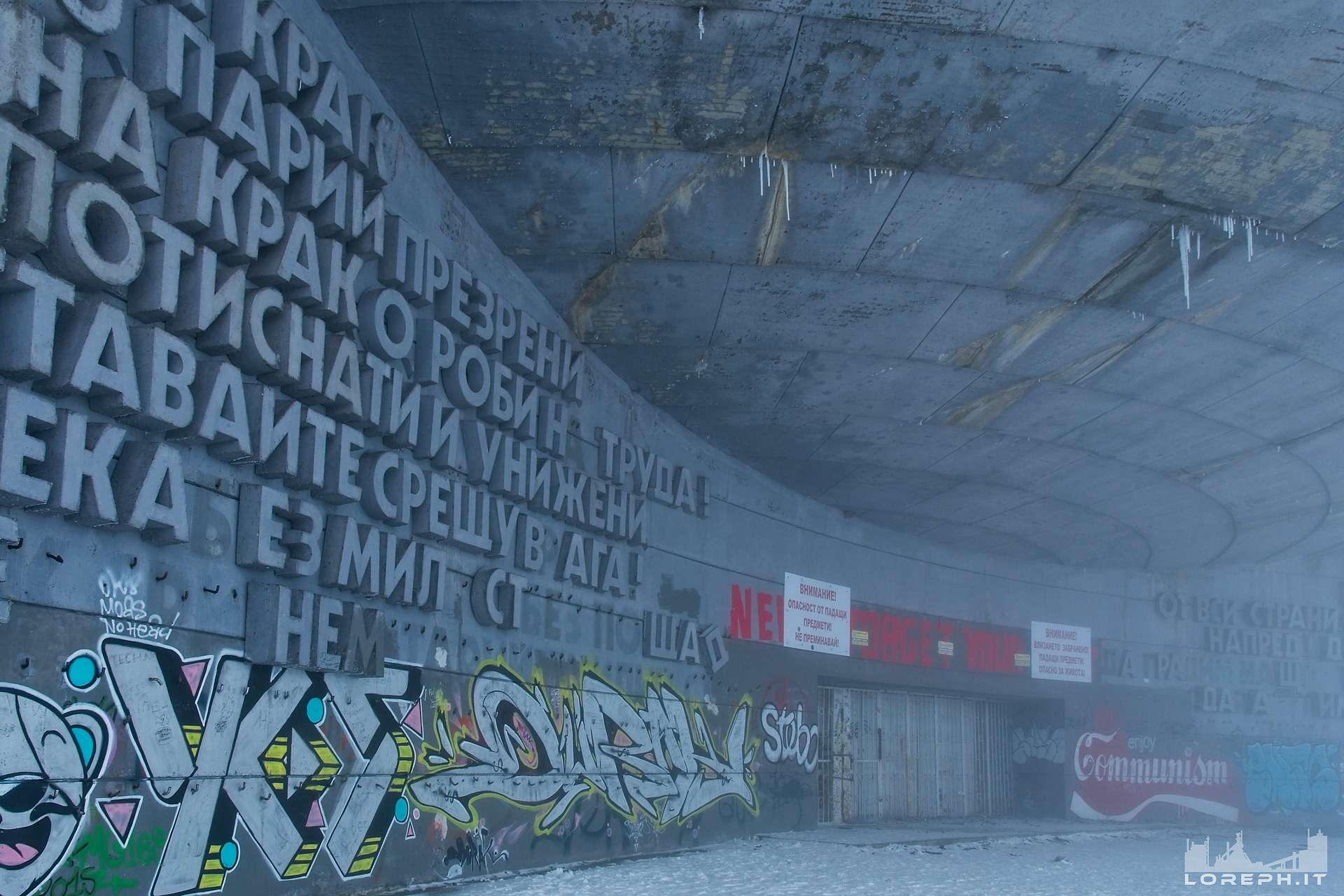
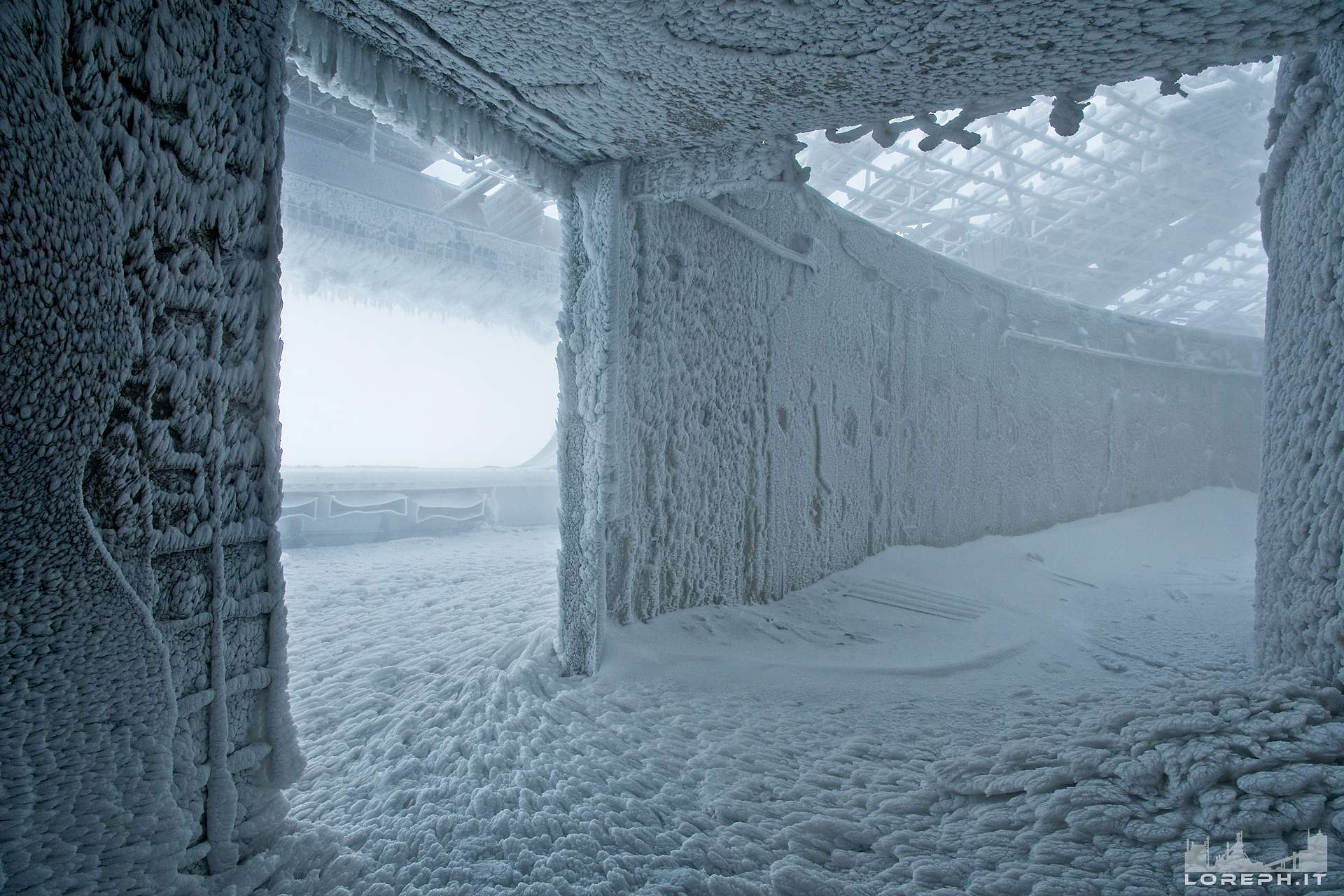
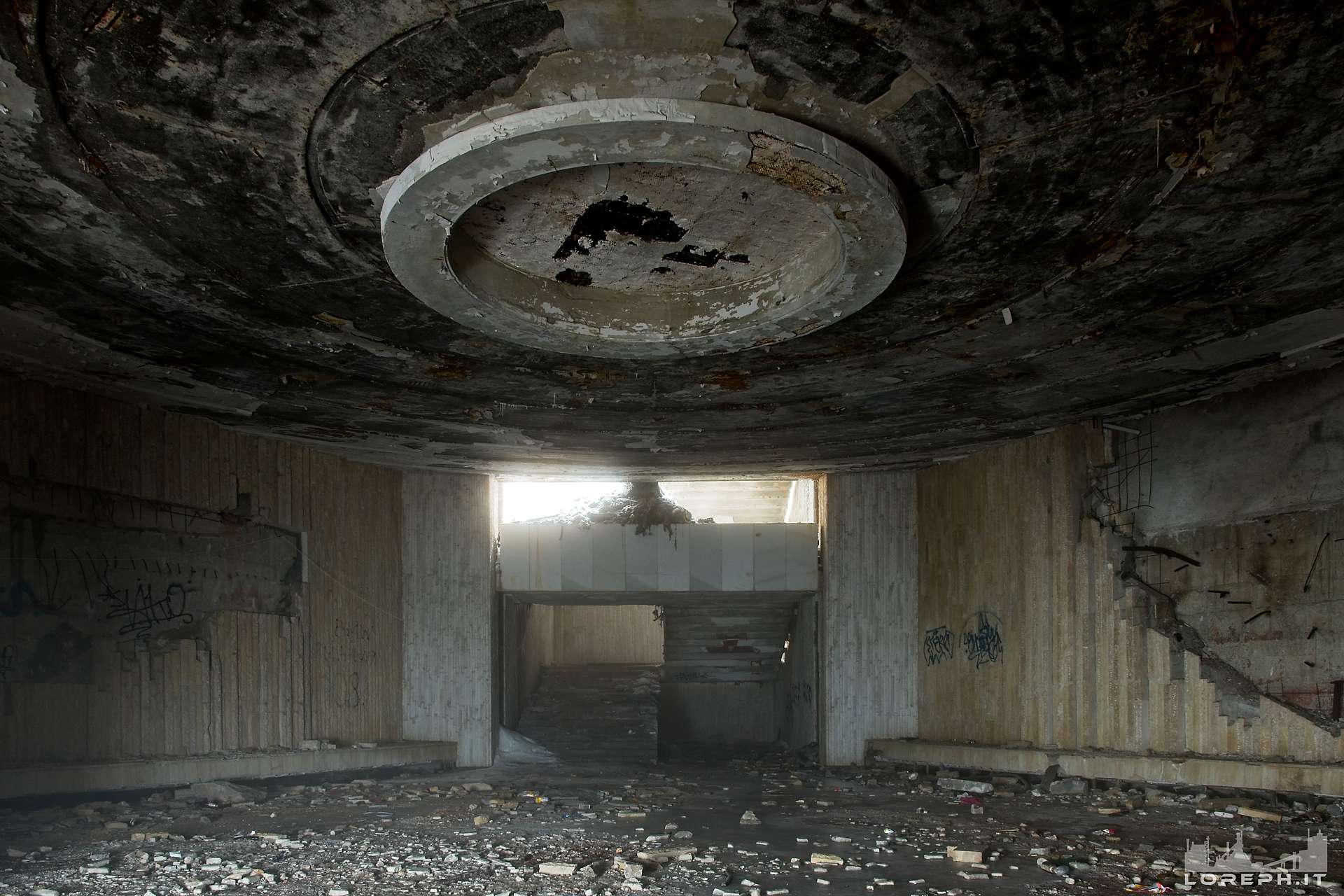
After the political changes in Bulgaria in November 1989, the new government had no interest in this symbol of communism and it was abandoned. Soon afterwards, the last employees left and the doors were locked. In the following years, the monument deteriorated. It became subject to theft, vandalism and weather influences. The building began to crumble, glass was broken, mosaics, ornaments and other elements of the monument’s structure were torn down. Everything in the building worth stealing, was stolen, including the copper covering the roof.
Several initiatives to preserve the monument had been undertaken throughout the years, not with much success. The latest initiative started in 2019 and after investigation, a Conservation Management Plan was made and it was indicated that the monument could be saved. In 2020, works started to stabilize the surviving mosaic panels. These conservation and preservation efforts are still ongoing.
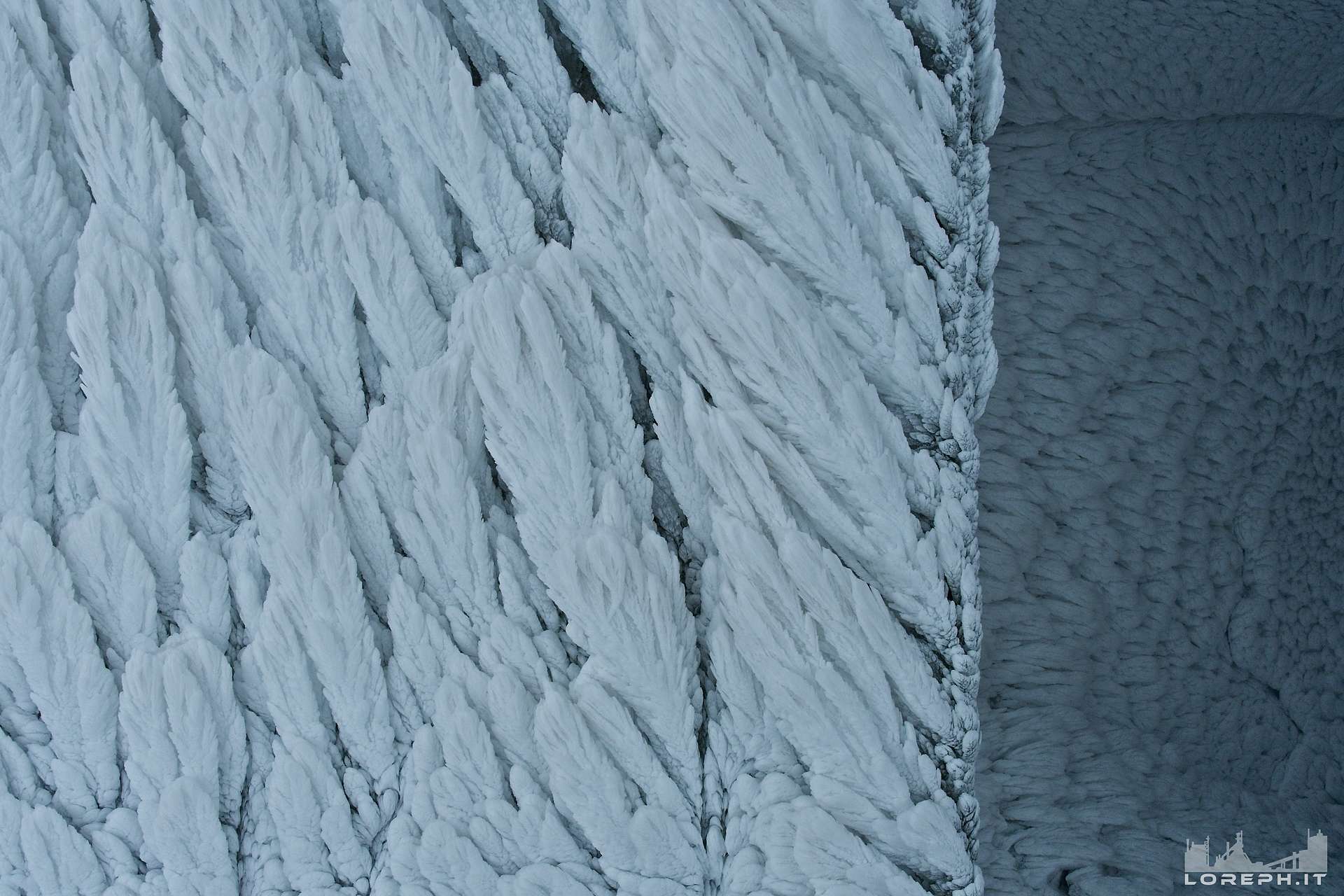
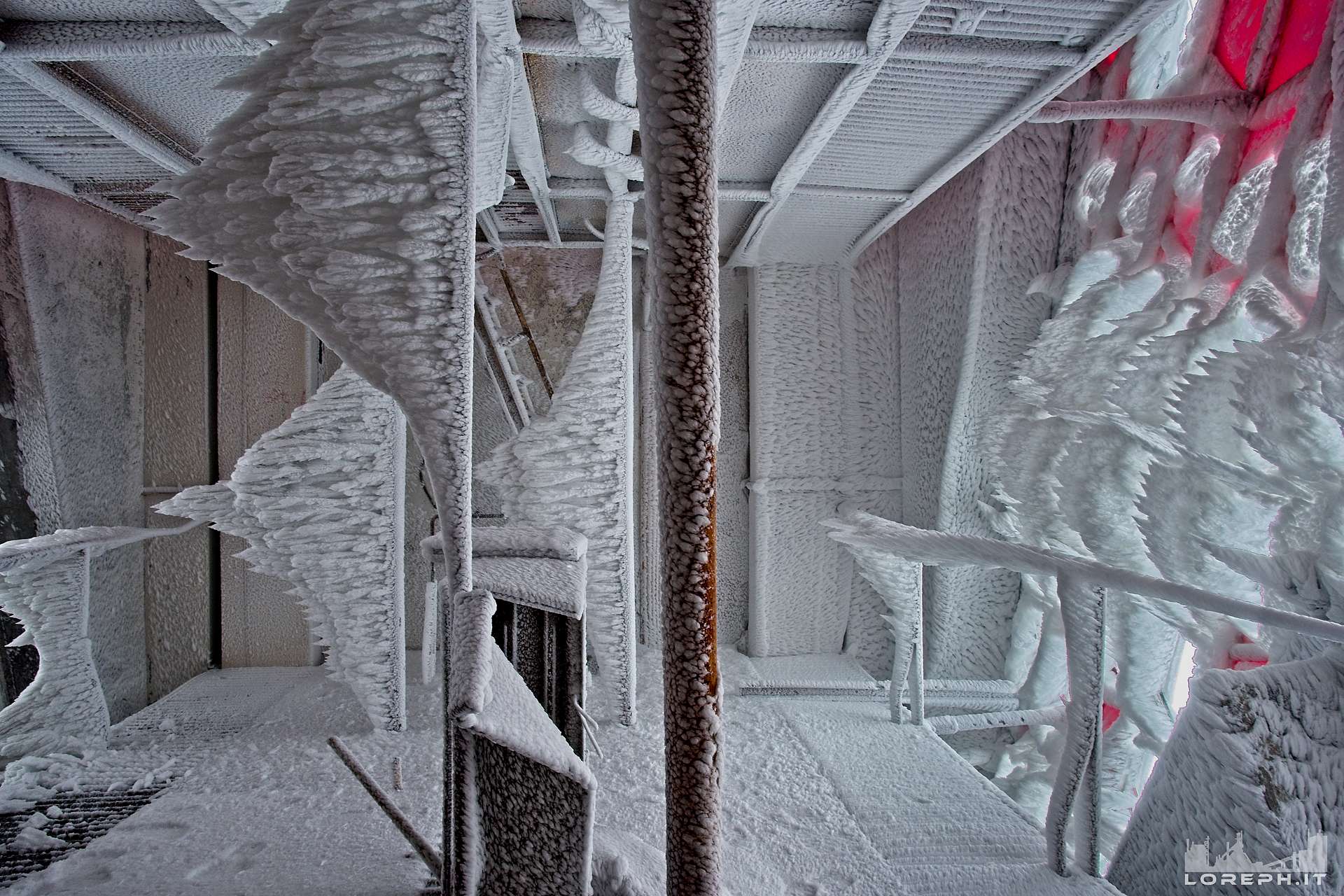
These photo are from my visit in March 2017 (fog and snow) and March 2018. Nowadays the monument is being renovated.